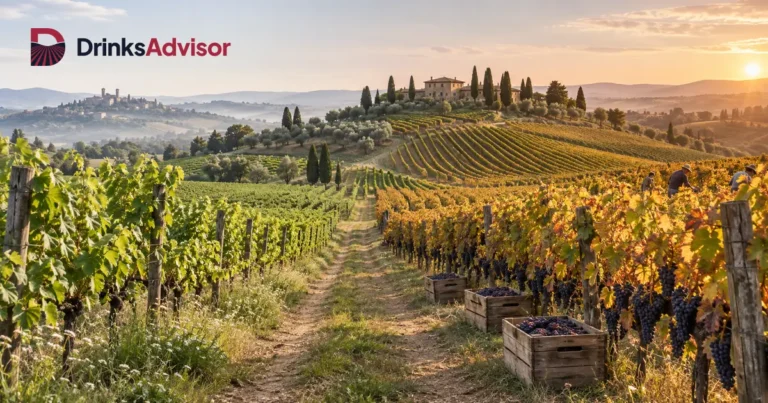
Wine harvest season is not one date on a calendar. In Napa the first sparkling grapes can come in by late July, while Cabernet Sauvignon in the Médoc may hang until mid-October. Tuscany, Bordeaux, Napa Valley and Rioja each pick on their own clock, and the weeks that make a good trip are not always the busiest weeks in the cellar. Here is when picking starts in each region, which weeks to aim for, and what you need to book early.
ⓘ We may earn a commission when you book through links on this page, at no extra cost to you. Affiliate Disclosure
- The overall window
- Late July to late October in the Northern Hemisphere, depending on region, grape and year
- What comes in first
- Grapes for sparkling wine and early whites, often weeks before the reds
- What comes in last
- Cabernet Sauvignon in Napa and the Médoc, Sangiovese on the higher Tuscan slopes
- Best weeks to visit
- Mid-September to mid-October in most years, when the red harvest is under way
- Book ahead
- Rooms in Napa and Saint-Émilion for September and October weekends, and any harvest event with limited places
- In one line
- Go for the reds, expect busy cellars, and treat joining the picking as a bonus rather than a promise
In this article
- When is wine harvest season?
- The grape harvest season, region by region
- Tuscany: Sangiovese sets the pace
- Bordeaux: whites first, Cabernet last
- Napa harvest season: from sparkling in July to Cabernet in October
- Rioja: Tempranillo and a festival in Logroño
- Grape stomping, picking and what you can actually join
- What to book months ahead
- Common questions
- Plan the trip around the reds
When is wine harvest season?
In the four regions on this page, wine harvest season runs from late summer into fall. The order is predictable even when the dates are not: grapes for sparkling wine are picked first, because they need high acidity and modest sugar. Aromatic whites follow, then the early reds such as Merlot and Tempranillo, and finally the late ripeners, Cabernet Sauvignon above all.
The dates move every year with the weather, and lately they have been moving earlier. The 2026 vintage was the clearest example yet. The first Napa sparkling pick reported in 2026 came in on July 21, Bordeaux started picking about 15 days ahead of 2025 according to the Conseil des Vins de Bordeaux, and Rioja opened its harvest on August 6 and closed the ordinary picking on September 22, the earliest on record for the region.
That is why this guide talks about weeks and patterns rather than fixed days. For a traveler, the useful question is not when the first grape is cut but when the reds are coming in, because that is when the cellars smell of fermenting must, the crush pads are working and the villages feel like harvest. In most years that means the second half of September and the first half of October.
The grape harvest season, region by region
The table sums up a typical year. Treat the dates as a guide: a hot summer pulls everything forward by one to three weeks, as 2026 did, and a cool, wet one can push the late reds back.
| Region | First picks | Main red harvest | Best weeks to visit |
|---|---|---|---|
| Tuscany | Mid-August (sparkling base, Chardonnay, Sauvignon Blanc) | Sangiovese, mid-September into October | Late September to mid-October |
| Bordeaux | Mid to late August (whites, Crémant) | Merlot from mid-September, Cabernet Sauvignon into October | Mid-September to early October |
| Napa Valley | Late July to early August (sparkling) | Cabernet Sauvignon, September to late October | September and October, weekdays |
| Rioja | Late August to September (whites, early plots) | Tempranillo, mid-September into October | The San Mateo festival week in late September |
Tuscany: Sangiovese sets the pace
Tuscany picks its whites and its sparkling base wines first, usually from mid-August. In 2026 some producers started before mid-August, about five to seven days ahead on average and up to two weeks ahead in parts of the Maremma, according to producers and Coldiretti Toscana.
The harvest that matters to most visitors is Sangiovese, the grape behind Chianti Classico, Brunello di Montalcino and Vino Nobile di Montepulciano. The Consorzio del Vino Nobile expects its grapes to be picked from the second week of September, and the higher, cooler sites in Chianti Classico and Montalcino often finish in October. Late September to mid-October is the sweet spot: picking is under way, the weather is usually mild, and the August crowds have gone.
Harvest also has a festive side in Tuscany. Impruneta, just south of Florence, held the 100th edition of its Festa dell’Uva in 2026, with the parade of the four rioni on the last Sunday of September. For a month-by-month view of tasting-room hours and crowds, see the best time to visit Tuscany wineries; for where to base yourself, the Tuscany wine country guide and our pick of vineyard hotels in Tuscany.
Bordeaux: whites first, Cabernet last
Bordeaux harvests in a clear sequence. Grapes for Crémant de Bordeaux and the dry whites of Pessac-Léognan and Entre-Deux-Mers come first, then the Merlot that dominates Saint-Émilion and Pomerol, and last the Cabernet Sauvignon of the Médoc. Sauternes is the exception: its botrytized grapes are picked in several passes through the vines, often well into October.
2026 showed how far the calendar can move. The first grapes for sparkling wine were in by mid-August, and Château Troplong Mondot in Saint-Émilion began its earliest red harvest on record on August 19. In a more typical year, mid-September to early October is when both banks are picking reds, and Saint-Émilion marks the moment with the Ban des Vendanges, when the Jurade proclaims the start of harvest from the top of the King’s Tower.
One practical warning: a château mid-harvest is a working winery, and some reduce visits or close their tasting rooms on the busiest days. Book tours in advance and ask what will be open. Our Bordeaux wine travel guide explains how the Left and Right Banks differ, and where to stay in Saint-Émilion covers the village that feels most like harvest.
Napa harvest season: from sparkling in July to Cabernet in October
Napa harvest season is the longest of the four. Visit Napa Valley describes it as running from late summer through fall, with sparkling wine grapes usually first, often in early August, and Cabernet Sauvignon later than most other varieties. In 2026 Round Pond Estate in Rutherford picked its first sparkling grapes on July 21, close to the 2015 harvest, which began on July 22.
The valley calls this period “crush,” and it changes the feel of a visit. Tasting rooms stay open, but you may see bins of fruit arriving on the crush pad while you taste, and many wineries add harvest parties, winemaker dinners and grape stomps. The flip side is demand: September and October weekends are among the most expensive of the year for hotels, so a Monday-to-Thursday trip gets you the same harvest at a lower rate.
For the valley’s four wine areas and how to get between them, start with Napa Valley wine country. For a harvest stay with a spa and vineyard views, see our Napa Valley wine resorts, or Calistoga’s spa hotels at the quieter north end of the valley.
Rioja: Tempranillo and a festival in Logroño
Rioja’s harvest usually centers on Tempranillo from mid-September into October, with the higher vineyards of Rioja Alavesa and Rioja Alta finishing last. 2026 broke that pattern: according to the Consejo Regulador DOCa Rioja, picking started on August 6 and the ordinary harvest was declared over on September 22.
What does not move is the festival. Logroño celebrates the harvest during the Fiestas de San Mateo in late September, with the treading of the grapes and the offering of the first must on the Paseo del Espolón. Our guide to the Rioja wine harvest festival covers the 2026 program and what the week is like on the ground.
For the three Rioja zones, read the Rioja wine country guide. To sleep among the vines rather than in town, our bodegas with rooms in Rioja range from a Frank Gehry hotel in Elciego to vineyard villas near Haro.
Grape stomping, picking and what you can actually join
Grape stomping is the harvest activity most visitors picture, and it is easiest to find in Napa. Wineries such as PEJU have run a harvest festival with a grape stomp, and the valley’s event calendars list stomps, harvest parties and blending sessions every fall. In Europe the stomp is more often a public ritual than a winery activity: the treading of the grapes in Logroño during San Mateo is the best example.
Joining the actual picking is harder. Harvest teams work fast, the timing depends on the weather, and safety and liability concerns keep most wineries from putting guests in the rows. Some estates offer a morning in the vineyard for their hotel guests or wine club members, but these are rarely bookable months in advance, and you will not find them on the big tour platforms. If picking matters to you, choose a winery that also has rooms, ask when you book, and keep your plans flexible by a few days.
What every visitor can do is taste during the harvest. Cellars are full of fermenting wine, many tours walk past the sorting tables, and some wineries pour the first juice of the vintage. That alone is worth the trip.
What to book months ahead
Harvest weeks are high season for wine country hotels, and the best places sell out first. For Napa and Saint-Émilion in late September or early October, book rooms three to six months ahead. In Tuscany and Rioja there is more choice, but vineyard estates with a handful of rooms fill early for the same weeks.
Tastings at well-known estates need a reservation year-round, and during harvest the slots are fewer. Reserve them once your dates are fixed. If you plan to drive between regions or estates, book the car early too, and agree beforehand who stays sober: our guide to renting a car for a wine trip covers licenses, insurance and drink-driving limits in Europe.
Compare Bordeaux Rentals on DiscoverCars →
Common questions
What month is wine harvest season?
In the Northern Hemisphere, September and October are the core months, with sparkling and early white grapes picked in August and, in warm years, late July. In the Southern Hemisphere the harvest falls between February and April.
Which region has the longest harvest?
Of the four on this page, Napa Valley. Its first sparkling grapes can come in by late July or early August, and Cabernet Sauvignon is often still being picked in late October, so the valley feels like harvest for close to three months.
Can you help pick grapes as a visitor?
Sometimes, but rarely as a product you can book far in advance. Picking dates depend on the weather, and most wineries keep guests out of the rows. Your best chance is an estate with rooms that offers a harvest morning to its own guests.
Are wineries open during harvest?
Most are, though some limit visits on the busiest days. Napa tasting rooms generally stay open throughout. In Bordeaux and Tuscany, smaller estates may close the cellar door for a few days at a time, so book ahead and confirm a week before.
Plan the trip around the reds
The grape harvest season rewards travelers who plan around the reds and keep a little flexibility. Pick your region, aim for the second half of September or early October, and lock in the room before the tastings. Then let the cellar calendar fill the rest: the festival in Logroño, a stomp in Napa, or a Sangiovese tasting with the fermenters bubbling behind you.