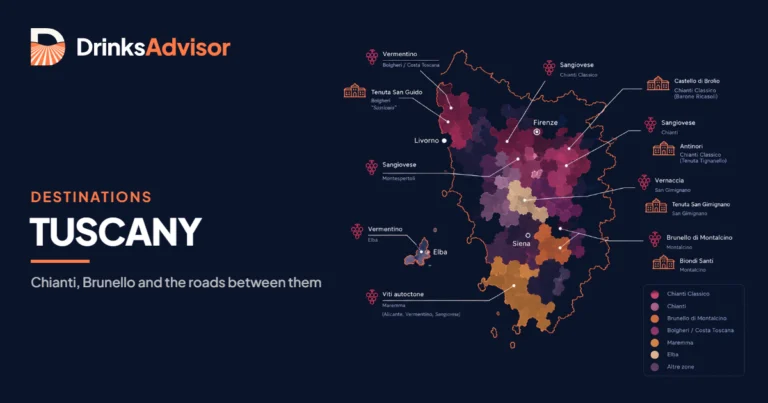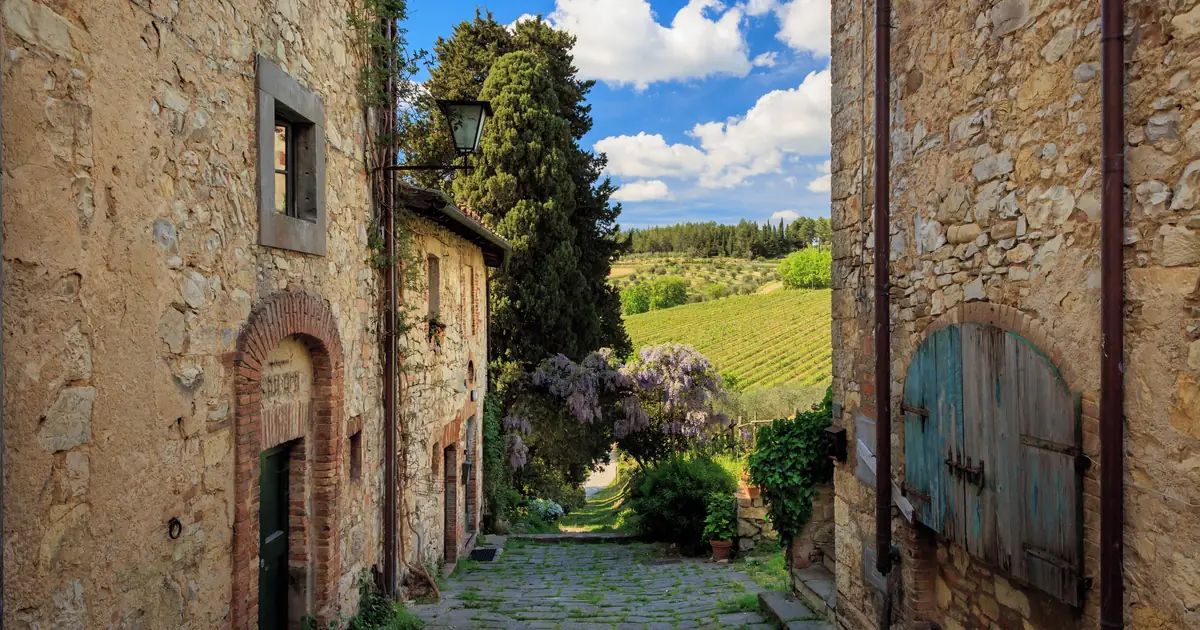
There are more vineyard hotels in Tuscany than in any other region of Italy, and wildly different ideas of what one should be. A Renaissance castle with a restaurant and a spa is a different holiday from a hilltop borgo where the cellar is fifty steps from your room. These eight are all working wine producers with rooms you can book, spread from Chianti Classico to the Maremma coast — with what each one is good at, what it costs, and when to go.
ⓘ We may earn a commission when you book through links on this page — at no extra cost to you. Affiliate Disclosure
In this article
How we chose these vineyard hotels in Tuscany
Three rules, applied to every property on this page.
It has to make wine commercially. Not just a decorative row of vines by the parking lot, but an estate that bottles and sells under its own label. Where a property is a member of its appellation’s consortium, or publishes its own production detail, we say so.
It has to have rooms the public can book. No members-only clubs, no villas that only rent by the month.
Everything we state has to be checkable. Ratings and prices come from our booking partner and are labeled as such; history, farming and production details come from the estate’s own published material or its consortium. Where we could not verify something, we left it out.
What we are not doing is ranking them. The order below runs north to south, because the useful question here is not which estate is best: it is which part of Tuscany you want to wake up in. Our full criteria are published in Our Editorial Methodology.
If you are still deciding on the region itself, start with our Tuscany wine country guide, which covers how the areas differ and when to go.
Chianti Classico
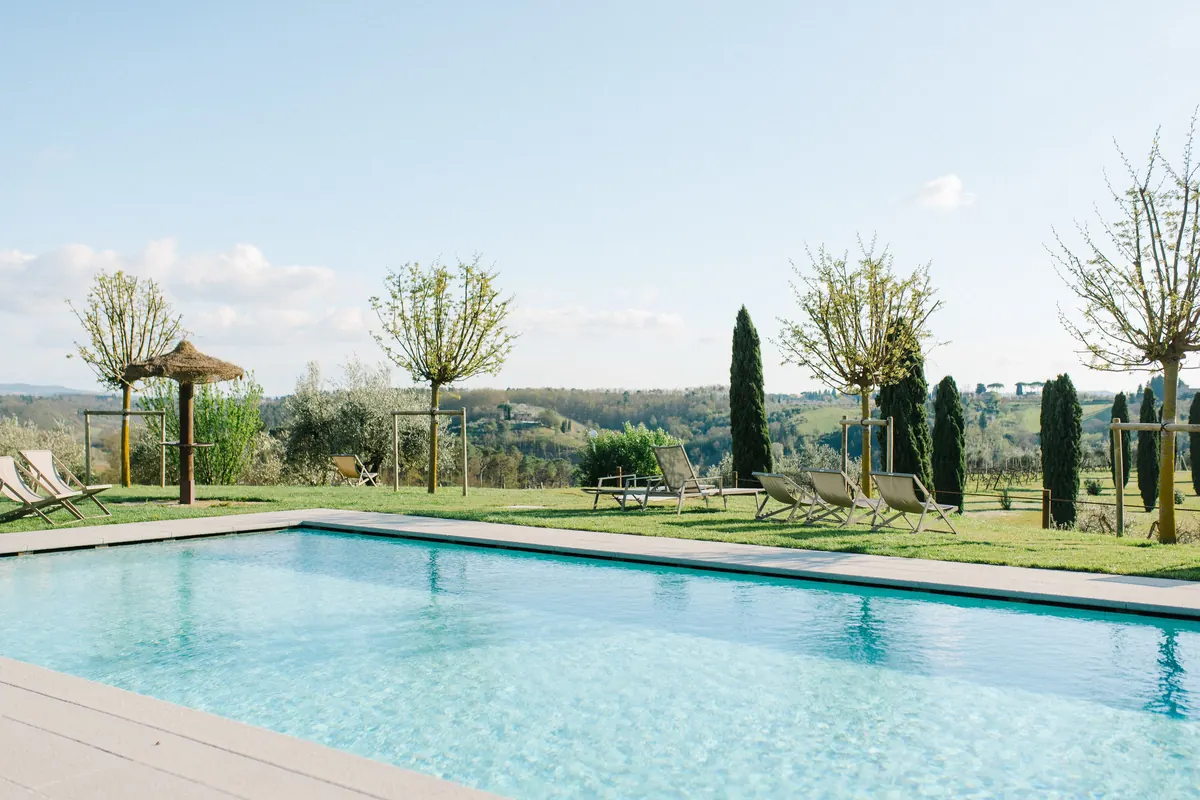
1. Salvadonica — Borgo del Chianti, San Casciano in Val di Pesa
Salvadonica is the pick for a first Tuscan wine trip, or for anyone who wants the vineyard setting without the castle budget. It sits at the northern edge of Chianti Classico, close enough to Florence that the city is an easy evening out.
The trade-off is scale: this is a restored hamlet of farmhouse rooms and apartments, not a hotel with a concierge desk. Of the eight, it is also the easiest to combine with a few days in the city.
Good to know
Check Availability on Expedia →
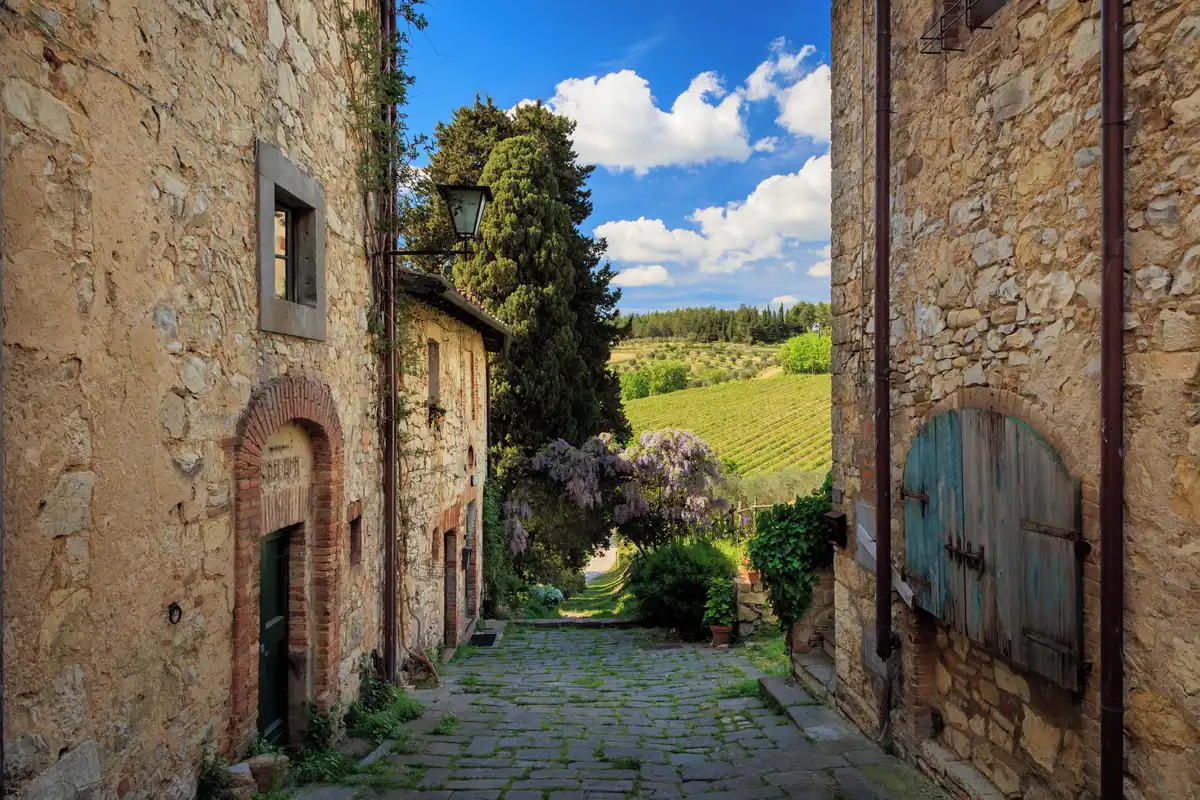
2. Castello di Fonterutoli Wine Resort — Castellina in Chianti
Fonterutoli is the closest thing on this page to sleeping inside a piece of Chianti Classico history. The Mazzei family has been here since 1435 and still runs it: the hamlet, the cellar and the resort are one operation.
The rooms are spread through the restored village rather than a single hotel building, so the walk to dinner goes past the cellar. Castellina is a good base for the central stretch of the appellation, with Radda and Panzano close and Siena a short drive south.
Good to know
Check Availability on Expedia →
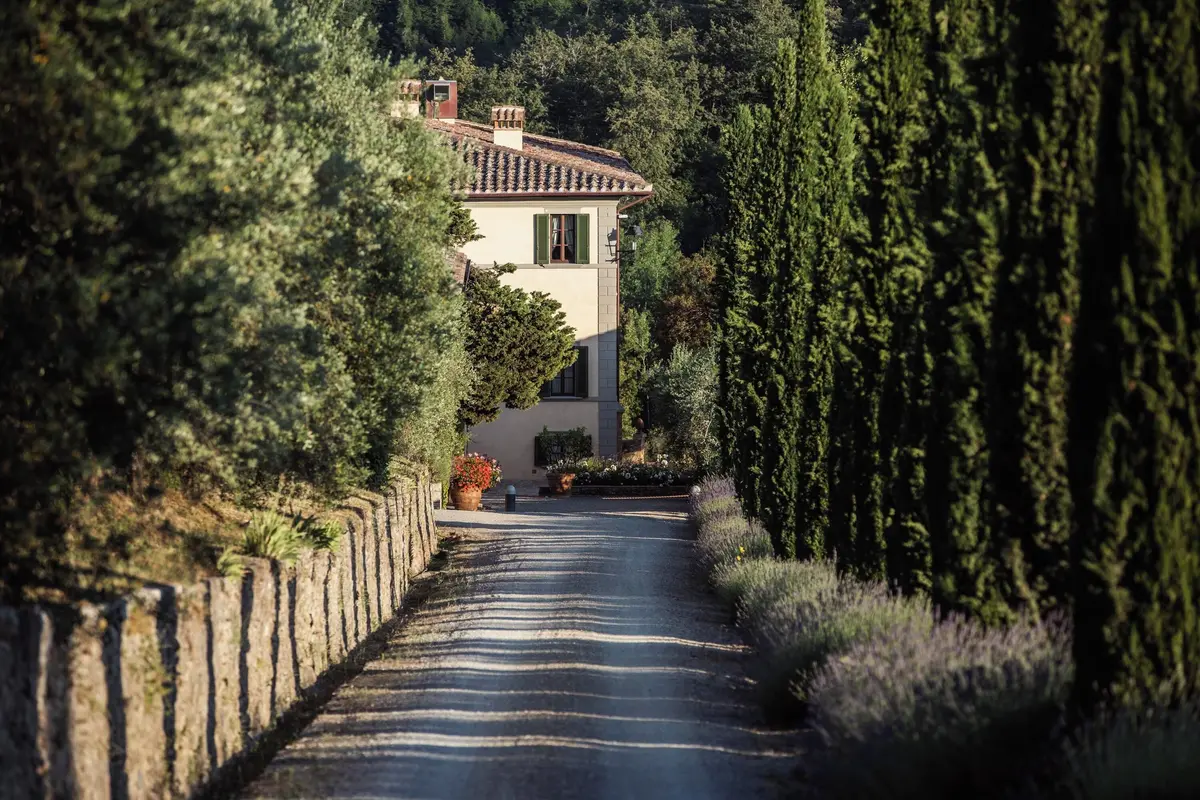
3. Dievole Wine Resort — Castelnuovo Berardenga
Dievole occupies the southern end of Chianti Classico, close enough to Siena to make the city an easy evening out, far enough into the hills to feel remote. The estate documents its own history back to 1090 and has been heavily reinvested in over the past decade.
Of the three Chianti Classico properties here it is the most hotel-like, with the polish of a resort, while still being a genuine producer. A good pick if you are traveling with someone who wants the wine trip and someone who wants the holiday.
Good to know
Check Availability on Expedia →
Book it
Not sure which corner of Chianti to base yourself in?
Compare every property in the Chianti region, filtered and ready.
Montalcino and the Val d’Orcia
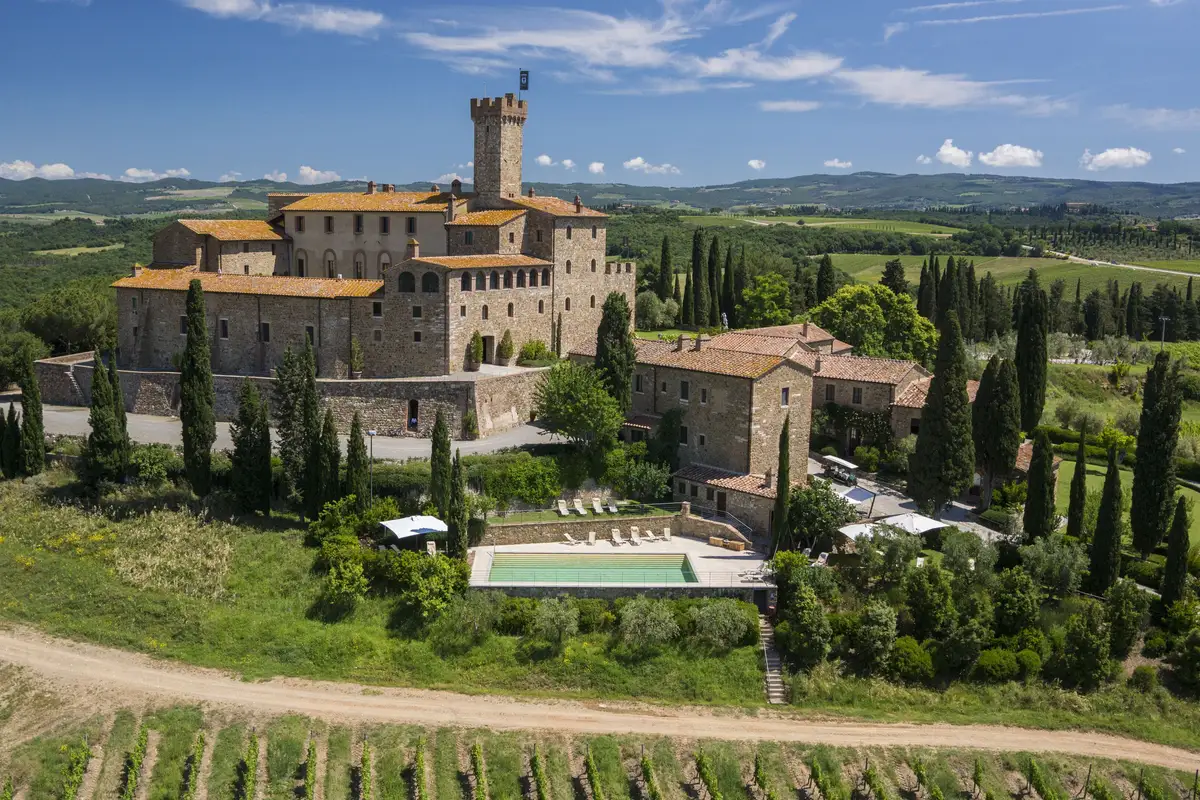
4. Castello Banfi — Il Borgo, Montalcino
Banfi is one of the largest and most visible producers in Montalcino, and Il Borgo is the small Relais & Châteaux hotel built into the restored hamlet beside the castle at Poggio alle Mura. It is the version of Montalcino that comes with full infrastructure rather than a farmhouse with a spare wing.
That makes it the least intimate estate on this page and the easiest to plan around. If it is your first trip to Montalcino and you want the wine explained properly before you start knocking on smaller cellar doors, it is a rational first night; just remember that the roads back from town are dark.
Good to know
Check Availability on Expedia →
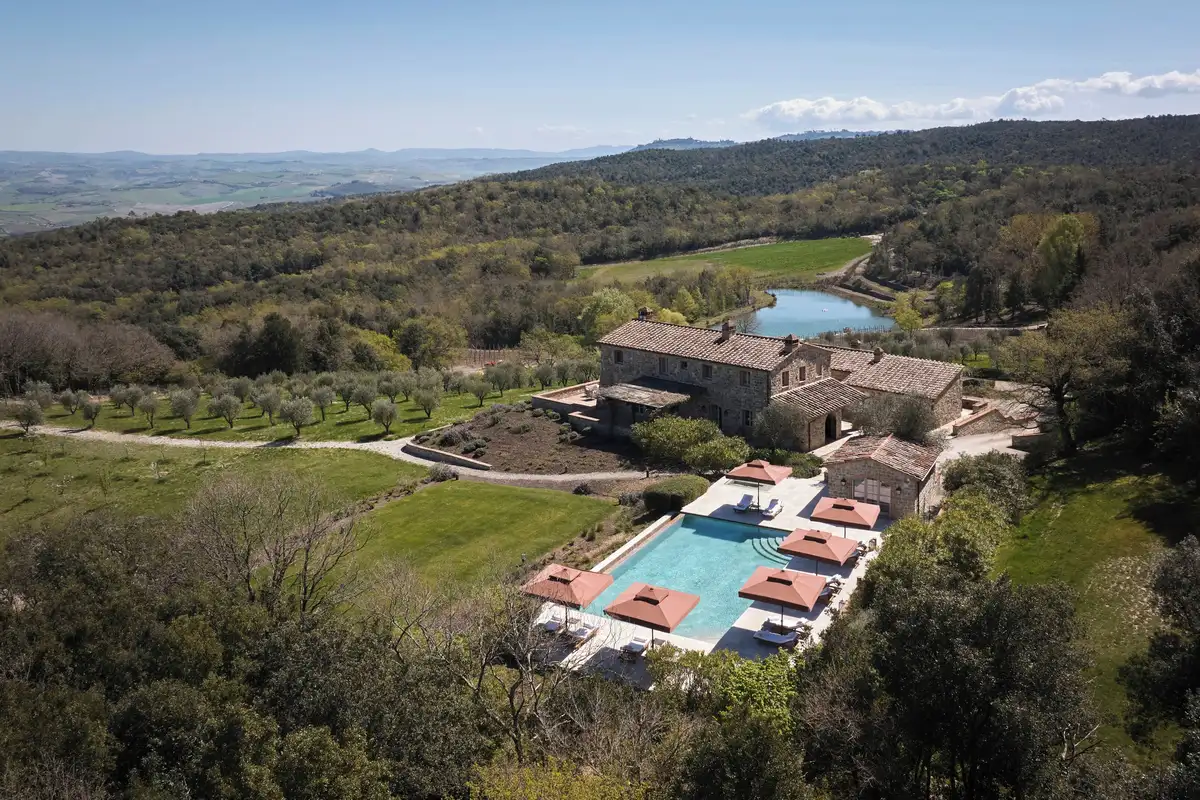
5. Castiglion del Bosco, A Rosewood Hotel — Montalcino
Castiglion del Bosco is the most expensive way to sleep in Montalcino, and the wine is not an amenity bolted onto a resort. The estate sits inside a large private stretch of the Val d’Orcia, which is what you are really paying for: the landscape around the hotel is the landscape, not a view of someone else’s.
It suits a longer, slower trip rather than a touring base, because the drive to Montalcino town takes long enough that most guests do not do it twice a day. Our booking partner lists mostly suites and villas; the entry-level rooms are usually sold direct.
Good to know
Check Availability on Expedia →
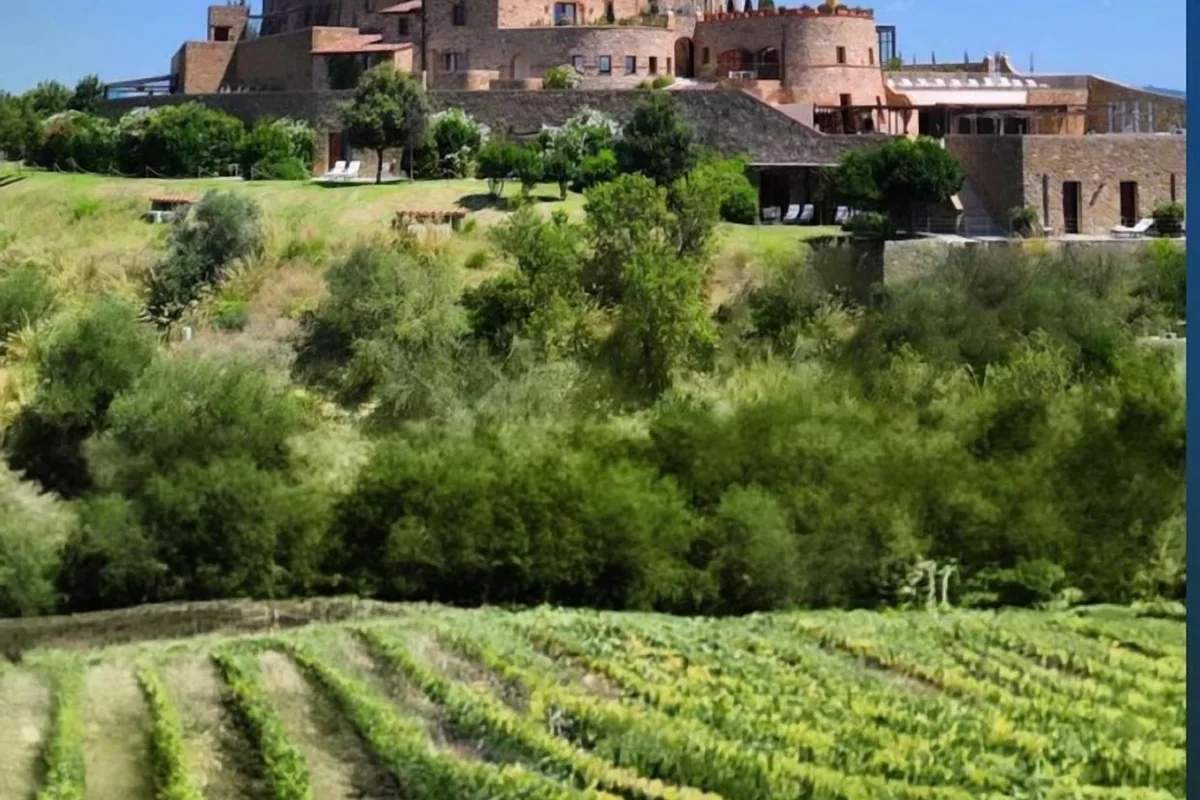
6. Castello di Velona Resort, Thermal Spa & Winery — Castelnuovo dell’Abate
Velona is the Val d’Orcia view you came for, from a castle on a ridge above Castelnuovo dell’Abate, and the only estate on this page with a thermal spa fed by the area’s hot springs.
It is the pick for a couple who want the wine, the landscape and a full spa day in the same place, and who do not mind that the drive up is steep and narrow. The abbey of Sant’Antimo is a few minutes away and worth the detour.
Good to know
Check Availability on Expedia →
Book it
Staying in Montalcino?
See what is available across the whole appellation, not just these three.
Beyond the classic zones
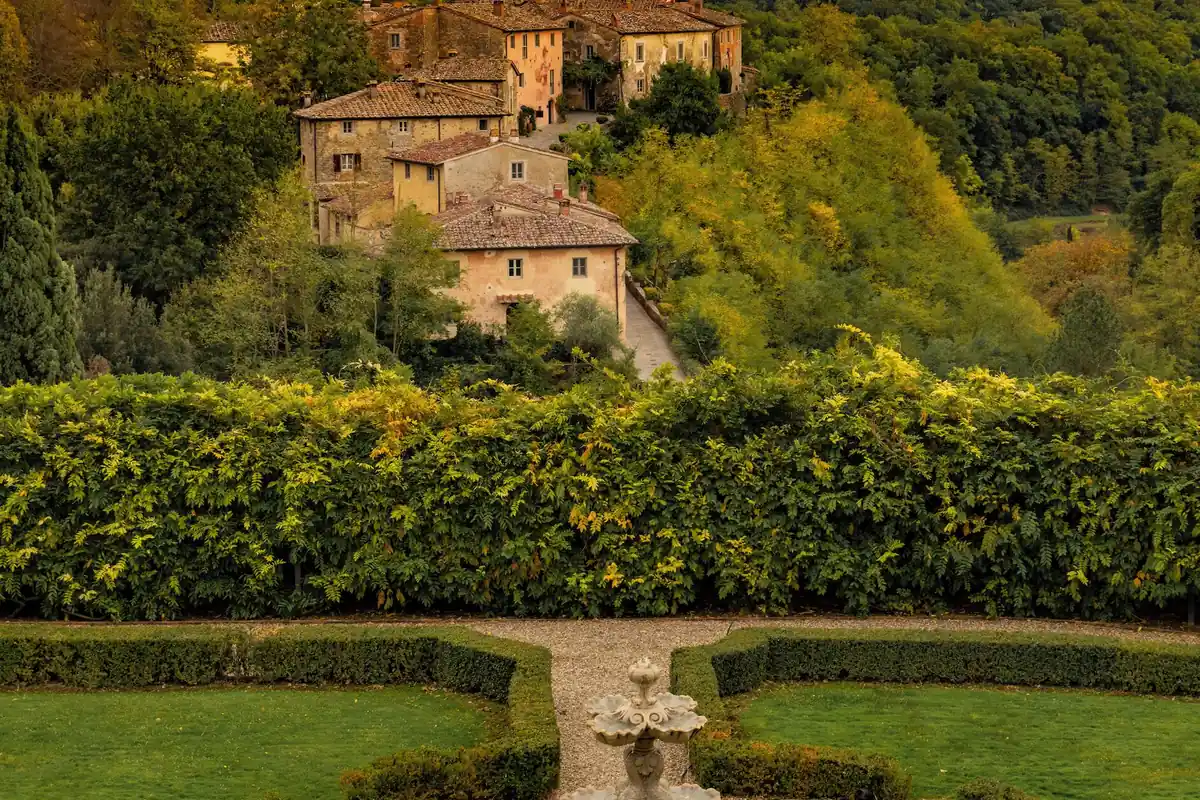
7. Il Borro — Loro Ciuffenna, Valdarno
Il Borro is a restored medieval village east of Florence, owned by the Ferragamo family, farmed organically and producing wine under its own label. It is outside the famous appellations, which is precisely the argument for it: the Valdarno gets a fraction of Chianti’s traffic, and the property is large enough to disappear into for a few days.
It is the choice for travelers who want Tuscany without the queue for the famous names, and it works as a first or last stop of the trip, about an hour from both Florence and Arezzo.
Good to know
Check Availability on Expedia →
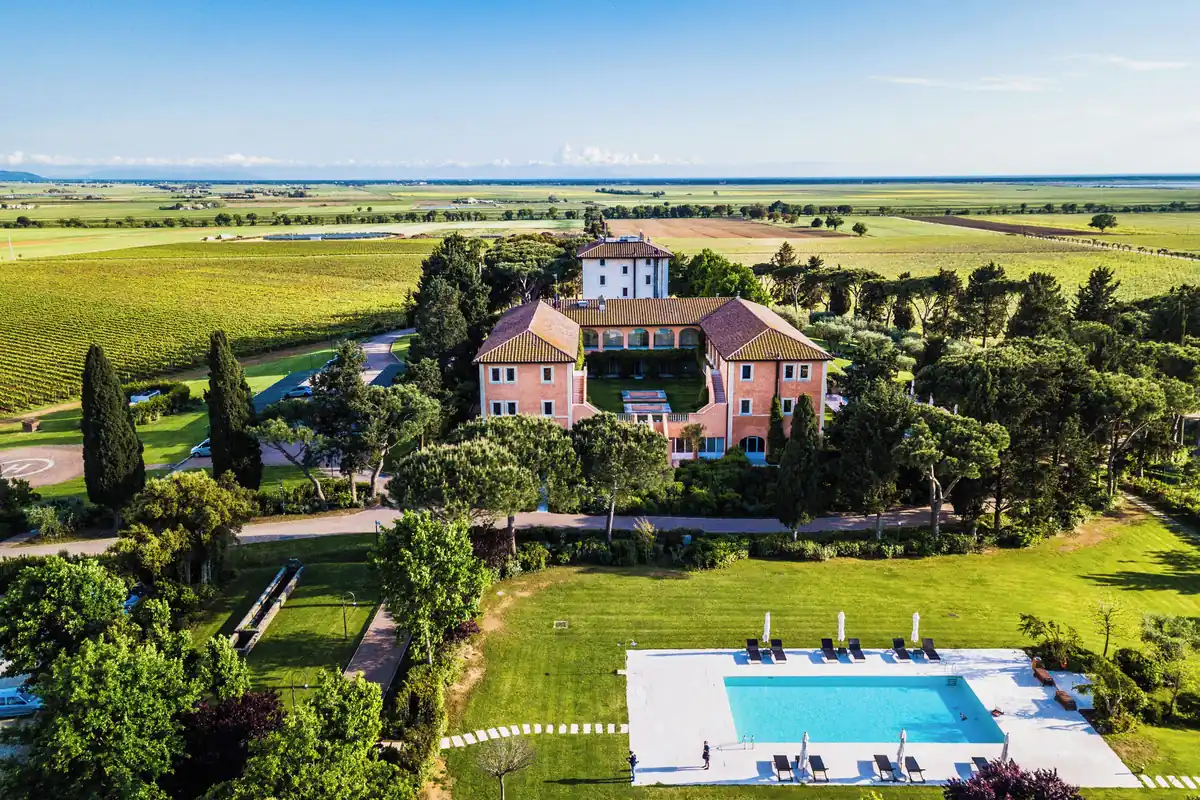
8. L’Andana — Tenuta La Badiola, Castiglione della Pescaia
L’Andana is the only coastal estate on this page, and the one you can combine with a beach without pretending. The Maremma is Tuscany’s least crowded serious wine country, and this is the most comfortable way to sleep in it.
Treat it as its own leg of the trip: it is about two hours from both Chianti and Montalcino, and Pisa is the more convenient airport.
Good to know
Check Availability on Expedia →
When to book
Harvest is the hardest window. Sangiovese usually comes in from mid-September into early October, and the estates that run harvest experiences fill those dates first. If the vendemmia is the point of the trip, book several months out and confirm directly with the property that guests are welcome during picking — some estates simply stop hosting while the cellar is working.
May, June and September are the peak rate months for exactly the reason you want to go then: the weather is good and the estates are fully open. Late October and November are noticeably cheaper, with olive harvest and new oil as compensation.
Winter is the gamble. A significant share of Tuscan vineyard hotels close between roughly November and March, and those that stay open often run reduced restaurants and closed pools. Check the current dates before you commit.
Getting there
All eight need a car. The nearest airports are Florence and Pisa; Rome Fiumicino is a longer drive but often cheaper from the US. Book the car early for September and October, when Tuscany runs short of automatics in particular — compare rental rates in Florence on DiscoverCars.
Two things to plan for: historic centers are camera-enforced limited-traffic zones, and many of these estates sit at the end of an unpaved road. Neither is a problem in a normal car; both are a problem at night in the rain without a plan. Our Tuscany wine country guide covers the driving rules, including Italy’s blood alcohol limits, in more detail.
Choosing between them
The honest summary is that the decision is geographic before it is anything else. Chianti Classico (Salvadonica, Fonterutoli, Dievole) puts you within reach of Florence and Siena and suits a first Tuscan wine trip, at three clearly different price points. Montalcino and the Val d’Orcia (Banfi, Castiglion del Bosco, Velona) is the more serious wine destination and the better landscape, at the cost of longer drives to everything else. Il Borro and L’Andana are the two that work for a trip that is not only about wine. If you have already settled on one zone, our guides to where to stay in Chianti and to Montalcino estates with rooms cover seven estates in each.
Whichever you pick, book the estate first and the tastings second. In this part of Italy the cellar you sleep above is usually the best one you will visit all week.
Prices are “from” rates, indicative and set by our booking partners: they change with dates and availability, so check the current rate on Expedia.