Napa Valley wine country comes down to arithmetic, and it is the part first-timers get wrong: thirty-odd miles of valley floor, more than 500 wineries, and a day that realistically holds three of them. The hard part is access: most tasting rooms take reservations only, and the good ones fill weeks ahead. This guide covers how the valley is laid out, what a tasting costs, when to come and how to get around without driving.
ⓘ We may earn a commission when you book through links on this page — at no extra cost to you. Affiliate Disclosure
- Best time to go
- April to June, then September to October for the crush
- Nearest airports
- OAK about 1–2 hours by road; SFO 1½–3 hours; STS about 30 minutes to Calistoga
- Getting around
- Highway 29 and the Silverado Trail; ride-hailing valley-wide, or the Vine Route 10 bus, Napa to Calistoga in about 40 minutes
- Typical budget
- County hotel rates averaged about $423 a night in 2025, with rooms from around $154; tastings average about $40
- Signature grapes
- Cabernet Sauvignon, 54% of all plantings, then Chardonnay, Merlot and Sauvignon Blanc
In this article
Understanding Napa Valley’s wine areas
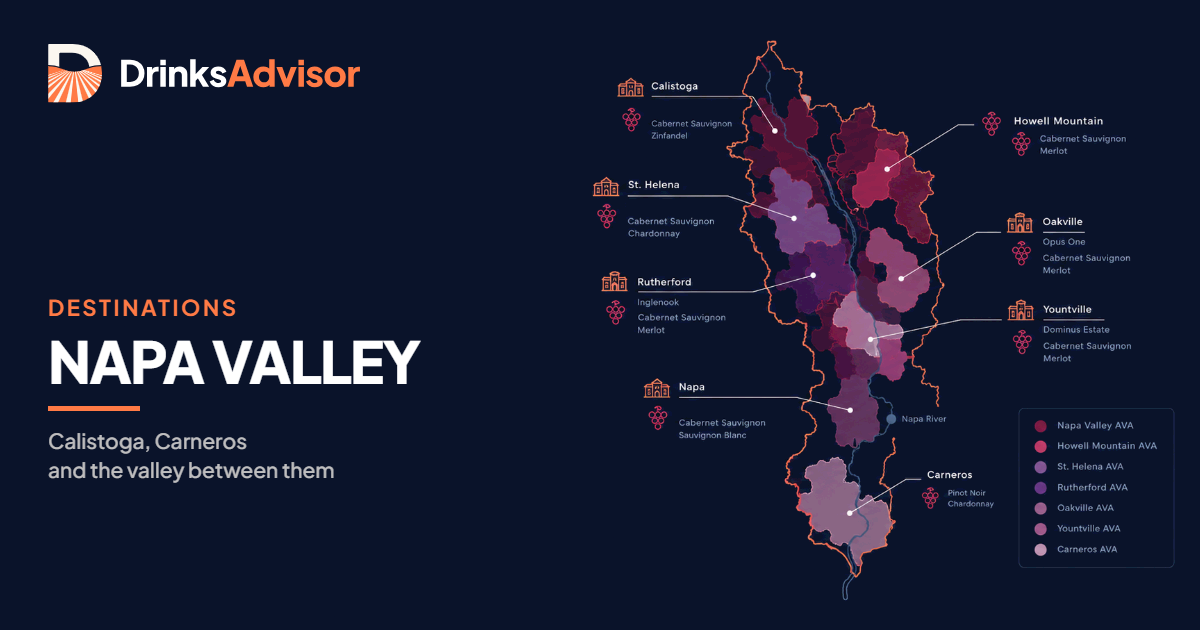
Napa Valley is smaller than most first-time visitors expect. The valley floor runs about thirty miles from the city of Napa to Calistoga and is roughly five miles across at its widest, and the appellations climb from sea level to around 2,600 feet on either side. Two roads run the length of it: Highway 29 along the western edge, busy and lined with the famous names, and the Silverado Trail on the east, quieter and faster, with cross roads every few miles connecting the two.
Two mountain ranges set the climate. The Mayacamas range on the west blocks the marine air coming off Sonoma; the Vaca range on the east shields the valley from Central Valley heat. Fog pushes up from San Pablo Bay in the south and thins as it goes north, which is why Carneros grows Pinot Noir and Calistoga, forty minutes away, ripens Cabernet.
Inside the Napa Valley AVA (the federal rule for which was published on January 28, 1981) sit seventeen nested sub-AVAs, each a smaller appellation with its own rules. You do not need to learn them all: for a visitor, Napa Valley wine country breaks into four wine areas, and those four cover almost every winery you are likely to book.
The valley floor: Oakville, Rutherford and Stags Leap District
This is the strip most people mean when they say Napa: benchland and alluvial soil between Yountville and St. Helena, where Cabernet Sauvignon became a global commodity. Oakville and Rutherford sit shoulder to shoulder on the floor; Stags Leap District is tucked against the eastern hills, where afternoon sun off the palisades and cooler evening air produce a softer style. These three are the easiest to visit and the hardest to book.
The mountains: Howell Mountain, Spring Mountain, Mt. Veeder and Atlas Peak
Above the fog line, everything changes. Mountain fruit ripens more slowly, the wines are firmer and more tannic, and the drive up takes twenty minutes of switchbacks that no one warns you about. Howell Mountain and Atlas Peak sit on the Vaca side, Spring Mountain, Mt. Veeder and Diamond Mountain District on the Mayacamas side. Book one mountain estate per trip, in the morning, and give yourself the drive.
The cool south: Los Carneros and Coombsville
Carneros straddles the Napa–Sonoma county line at the bay end of the valley, where the fog arrives first and stays longest. It is the one part of Napa that makes serious Chardonnay and Pinot Noir, and where the sparkling houses are. Coombsville, east of the city of Napa, is the least-visited good appellation in the county and the closest to a hotel room downtown.
The north end: St. Helena, Calistoga and the newest AVA
Past St. Helena the valley narrows and warms. Calistoga is the hottest daytime appellation in Napa and the one with hot springs and spa hotels, which gives it more of a resort feel than the rest of the valley. The valley’s newest appellation is up here too: the Treasury Department established Crystal Springs of Napa Valley in October 2024, effective that November, covering about 4,000 acres and trimming the Calistoga boundary so the two would not overlap.
What a tasting costs, and why you need a reservation
Visit Napa Valley puts the average basic tasting at about $40, with a range from about $20 to $200 or more. The published fees bear that out. Frog’s Leap in Rutherford charges $50 for its Garden Tasting and $100 for the ninety-minute Rooted in Rutherford. Schramsberg in Calistoga runs $70 for six sparkling wines and $100 with the cave tour. Charles Krug lists $50 for the estate tasting, $90 for a tour, and $150 for caviar and wine. All figures read on September 6, 2026.
Note what those numbers do to a day. Three tastings for two people at the valley average is roughly $240 before lunch, tips or a bottle.
Any advice to just drop in on a winery is out of date, and the reason is zoning. Napa County adopted its Winery Definition Ordinance on January 23, 1990, and wineries approved since then operate under discretionary use permits that typically specify tours and tastings by prior appointment only, with visitor caps and a fixed number of marketing events per year. That is why a valley with more than 500 wineries has so few open doors, and why popular rooms fill weeks out. Watch for booking surcharges too: Castello di Amorosa adds a flat $4.95 to every online reservation.
Before you book
When to visit Napa Valley wine country
Spring, March to May. Mustard has finished, bud break happens, and the valley is green in a way it will not be again until winter. Highs climb from 67°F in March to 76°F in May, and rain days drop from eight to two. May is the best all-round month here: warm, dry, and not yet at summer prices.
Summer, June to August. Highs of 81–83°F on the floor and hotter in Calistoga, with cool mornings and cool nights. It is the busiest stretch and the least interesting one in the vineyard: the vines are growing and the cellars are quiet.
Fall, September to November. Crush. Picking typically starts in August with Chardonnay and Sauvignon Blanc, and the reds (Merlot, then Cabernet Sauvignon) run through October and sometimes into early November. Most fruit comes in overnight, before sunrise, which is why the roads are busy at three in the morning and the cellars smell of fermenting must by breakfast. September still averages a high of 83°F; October drops to 77°F.
Winter, December to February. Highs in the high 50s and low 60s, eight or nine rain days a month, and the fewest crowds of the year. Napa Valley Restaurant Month runs through all of January, the best-value window of the year. Premiere Napa Valley, the barrel auction, falls in February. It is trade-only, so there is nothing to attend, but hotels and restaurants fill up that week.
One caution for the fall. September and October are also peak wildfire and smoke season in Northern California. Book refundable rates in that window and check CAL FIRE’s incident page before you travel.
How to get around
Downtown Napa is about 50 miles north of San Francisco, and roughly an hour’s drive on a weekday and up to two on a weekend. By road, Oakland is about one to two hours away, SFO one and a half to three depending on traffic, Sacramento about an hour and a half, and Sonoma County’s Charles M. Schulz airport about thirty minutes from Calistoga at the north end. That last one is the sleeper option for anyone starting at the top of the valley.
Then the part that matters more than the route: do not drive the tasting day. California suspends licenses at 0.08% blood alcohol for drivers 21 and over, and at 0.01% for anyone under 21, and three tastings will put most people there. Uber and Lyft operate throughout the valley and private car services can be booked ahead. So can the Vine, the public bus network: Route 10, the Up Valley Connector, runs Napa to Calistoga by way of Yountville and St. Helena in about forty minutes, for a $2.00 adult fare or a $7.00 day pass. It will not reach a hillside estate, but it does link the five towns.
The Napa Valley Wine Train is the other way to see the floor without a car: a 36-mile round trip from downtown Napa to St. Helena and back, through Yountville, Oakville and Rutherford, with lunch or dinner aboard and, on the longer journeys, winery stops. The operator does not publish adult fares (the only public rate is a reduced $109 for children twelve and under on the Gourmet Express Lunch) so price it through the booking form before you build a day around it.
Compare rental rates on DiscoverCars →
Where to stay
Napa is expensive. County-wide average daily rates ran about $423 a night across 2025 at 64.6% occupancy, with rooms across the five towns starting around $154. For scale: overnight visitors spend an average of $771 a day in the destination and stay 4.4 nights.
Where you base yourself changes the trip more than the hotel does. The city of Napa has the restaurants, the widest price range and the only real nightlife. Yountville is walkable, small and the closest thing to a dining destination in California. St. Helena puts you in the middle of the valley floor. Calistoga is the spa end, with hot springs and a resort feel that suits a slower stay. We have gathered the estates and resorts worth the money in Napa Valley wine resorts, and the spa hotels specifically in Calistoga wine resorts.
Check Napa Valley Wine Resorts →
What to do
The simplest way to see the range: book one valley-floor classic, one mountain estate and one sparkling house in Carneros, and you will have tasted three very different Napas in a single trip.
Beyond the tasting rooms: the Wine Train for a day without a car, Castello di Amorosa in Calistoga for a medieval-style Tuscan castle that opened in 2007, the mustard bloom from January to March, and the Napa Truffle Festival in January. Our round-up of the best wine tastings in Napa Valley covers what is actually bookable, with prices and how far ahead to reserve.
Organic and biodynamic wine in Napa Valley
Napa’s sustainability story runs through Napa Green, a third-party certification with two separate tracks. Ninety-six wineries hold the winery certification, thirty-four of them at the “soil to bottle” level; fifty-one vineyards covering 5,500 acres hold the vineyard certification, which is built around regenerative farming, carbon farm plans and third-party audits every three years. Across the county, that is roughly one winery in five.
For travelers who care about how the fruit is farmed, two estates are worth booking specifically. Spottswoode in St. Helena is certified organic by CCOF, Demeter-certified biodynamic, Napa Green certified and a B Corporation, and runs a guided estate tour and tasting by appointment. Grgich Hills in Rutherford is Regenerative Organic Certified and USDA Organic, farms entirely estate fruit, and is one of the wineries the Wine Train stops at. Certification claims are worth checking on the estate’s own site before you book: several Napa wineries described as organic elsewhere make no such claim themselves.
Practical tips for US travelers
Check your state before you buy a case. Direct shipping is state law, not winery policy. A representative Napa shipping list excludes Alabama, Alaska, Delaware, Indiana, Maine, Mississippi, New Jersey, Oklahoma, Rhode Island, South Dakota and Utah outright, and caps others by volume: New York and Pennsylvania at 324 liters a year, Minnesota at 18. Someone 21 or over has to sign for the delivery, and no winery ships to a PO box. Ask at the counter before the bottles are packed.
Dress in layers and skip the perfume. A morning on Howell Mountain and an afternoon in Rutherford are different climates, and cologne in a tasting room ruins the wine for everyone at the bar. The dress code is wine country casual; jeans are fine everywhere.
Build in a slow morning. The valley’s pleasure is the drive between appointments, and a three-winery day scheduled tightly turns into a logistics exercise. Two tastings and a long lunch is a better trip than four tastings and a taxi.
Where to start in Napa Valley wine country
For a first trip, plan in this order. Start with the season: May for the weather, September or October for the crush and the smoke risk, January for value. Book the hotel next, because it sets which end of the valley you spend your mornings in. Then book the tastings, two or three a day, at least a few weeks out, and build the driving around whatever times you were given.
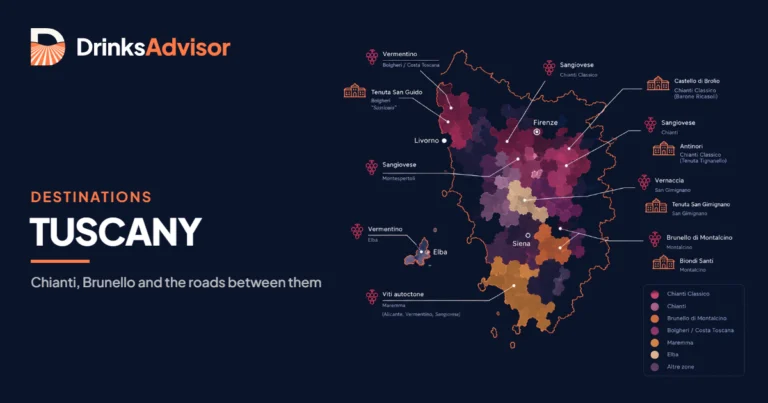
Keep the trip narrow. Four days, three appellations, one mountain estate, one sparkling house and a car service will show you more of Napa Valley wine country than a checklist of famous names seen through a windshield. Weighing Napa against Europe? Our guides to Bordeaux for wine travelers and Tuscany wine country cover the same questions on the other side of the Atlantic.
Check Napa Valley Wine Resorts →