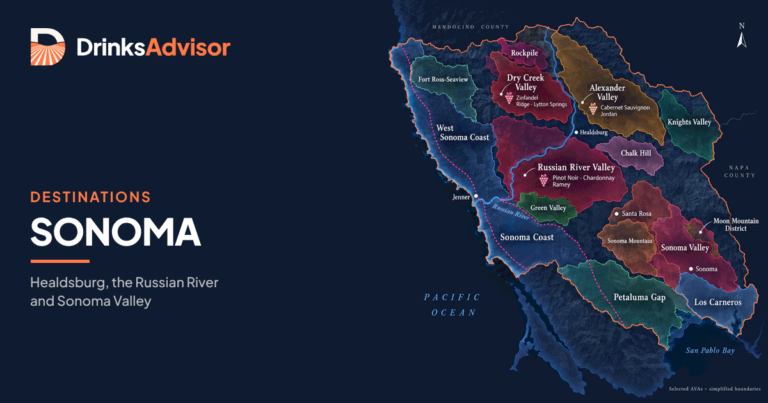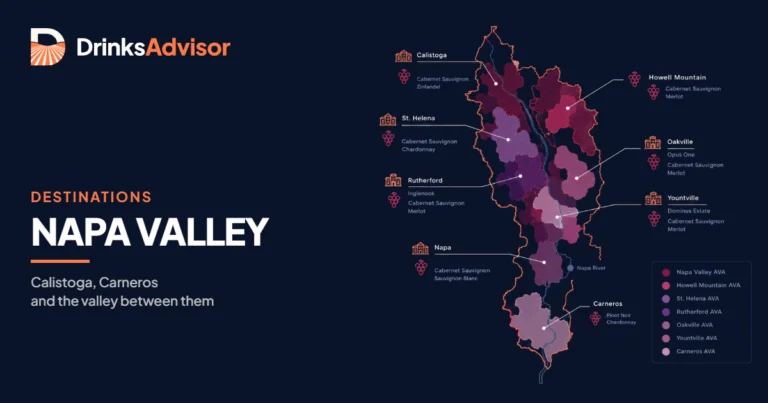
Napa vs Sonoma is the first decision most wine travelers make in Northern California, and the two are closer than they look: a single ridge, the Mayacamas, separates them. Napa is one compact valley built around Cabernet Sauvignon and reservations. Sonoma is a county of 19 appellations, cooler toward the coast and looser at the tasting bar. Here is how fees, hotels, drive times and wines compare, and which one fits your trip.
ⓘ We may earn a commission when you book through links on this page, at no extra cost to you. Affiliate Disclosure
- Signature grapes
- Napa: Cabernet Sauvignon, 54% of plantings. Sonoma: Chardonnay and Pinot Noir lead, with Cabernet and Zinfandel inland
- Standard tasting
- About $79 in Napa and $47 in Sonoma, on 2025 averages
- Hotel rates
- About $423 a night across Napa County and $208 across Sonoma County, on 2025 averages
- Size
- Napa’s valley floor runs about 30 miles; Sonoma County spreads from San Pablo Bay to the Pacific
- From San Francisco
- About an hour to downtown Napa or the town of Sonoma; about an hour and a half to Healdsburg
- In one line
- Napa for a focused, polished Cabernet trip; Sonoma for variety, Pinot Noir and a smaller bill
In this article
Napa vs Sonoma: how the two wine countries differ
The simplest way to picture the difference is a map. Napa is a single valley, about 30 miles from the city of Napa to Calistoga and roughly five miles across at its widest, with two roads running its length. Sonoma County is several valleys and a coastline, spread over a much larger area west and north of it. You can see most of Napa from one hotel. Sonoma rewards picking one corner and staying there.
The numbers follow the map. According to the Napa Valley Vintners’ fast facts, Napa County has more than 500 wineries, yet it supplies only 4% of California’s wine grape harvest, and Cabernet Sauvignon covers 54% of its vineyards. The Sonoma County Winegrowers count 19 American Viticultural Areas, around 59,000 acres of vines and more than 425 wineries, most of them family-owned. Napa concentrates; Sonoma spreads out.
That shapes the feel of a visit. Napa’s famous names sit shoulder to shoulder along Highway 29, with estates that look the part and fees to match. In Sonoma, a good day can mean a barn on a Dry Creek back road, a tasting room on the Healdsburg plaza and a foggy Pinot Noir vineyard twenty minutes away. Our Napa Valley wine country guide and Sonoma wine country guide cover each region area by area; this page is about choosing between them.
| Question | Napa | Sonoma |
|---|---|---|
| Layout | One valley, two parallel roads | Several valleys and a coast, far apart |
| Wineries | More than 500 | More than 425, mostly family-owned |
| Grapes to know | Cabernet Sauvignon above all | Chardonnay, Pinot Noir, Zinfandel, Cabernet |
| Standard tasting (2025 average) | About $79 | About $47 |
| Hotel rate (2025 average) | About $423 a night | About $208 a night |
| Walkable tasting rooms | Downtown Napa, Yountville | Healdsburg plaza, the town of Sonoma |
| Best for | A short, focused first trip | A longer trip, a return visit, Pinot Noir |
What a tasting costs in Napa and Sonoma
Tasting fees are the clearest gap between the two. Silicon Valley Bank’s 2026 Direct-to-Consumer Wine Report put the average standard tasting at about $79 in Napa Valley in 2025 and about $47 in Sonoma, where reserve tastings averaged around $95. For two people doing three wineries a day, that difference alone is close to $200 a day before lunch.
The published menus bear it out. In our round-up of the best wine tastings in Napa Valley, a seated tasting at a single estate runs around $75, with the grander experiences well past $100. Around Healdsburg, the Healdsburg wineries we cover pour seated tastings at family estates for about $30 to $50 a person, and many waive the fee when you buy bottles.
One cost is the same on both sides: the guided day. Small-group tours with a driver list similar ticket prices in each county, and in both the tasting fees at each stop are usually extra, at roughly $20 to $35 a winery. If you plan to be driven, compare the whole day, not just the ticket.
Hotel rates and where to base yourself
Rooms follow the same pattern as tastings. Napa County hotels averaged about $423 a night across 2025, while the Sonoma County Tourism 2025 quick facts show an average daily rate of about $208. Both counties have resorts well above $1,000 a night; the difference is how much good choice sits below that line.
In Napa, the base changes the trip more than the hotel does. Downtown Napa has the most restaurants and the widest price range, Yountville is small and walkable, and Calistoga at the north end is the spa town. Our picks of Napa Valley wine resorts, Calistoga spa hotels and where to stay in Yountville cover the options worth the money.
Compare Napa Valley hotels on Expedia →
In Sonoma, choose the base by the wine. Healdsburg puts Dry Creek, Alexander Valley and the Russian River within twenty minutes and has the most hotels at the top end. The town of Sonoma and Glen Ellen are the easiest drive from San Francisco and the closest to Napa. Small inns around Forestville and Guerneville suit a quiet Pinot Noir trip. Our guide to where to stay in Sonoma lists the wine country hotels and inns we would book.
Compare Healdsburg hotels on Expedia →
The wines: Cabernet country and the fog belt
If your favorite bottle is a big California Cabernet Sauvignon, Napa is the obvious answer. The valley floor between Yountville and St. Helena, with Oakville and Rutherford at its center, is where that style made its name, and the mountain appellations above the fog line give firmer, slower-ripening versions. Carneros, at the cool southern end, adds Chardonnay, Pinot Noir and sparkling wine.
Sonoma is the better choice if you want range. Fog pours in from the Pacific through gaps in the coastal hills, so the west is cool and the inland valleys are warm. The Russian River Valley and the Sonoma Coast make Pinot Noir and Chardonnay; Dry Creek Valley is known for old-vine Zinfandel, some of it planted in the 1880s and 1890s; Alexander Valley grows Cabernet. In one day you can taste three different climates.
A practical test: list the last three bottles you enjoyed. Mostly Cabernet and Bordeaux-style blends points to Napa. Pinot Noir, Chardonnay with acidity or Zinfandel points to Sonoma. A mix of both is the best argument for splitting the trip, which is easy here.
Crowds, reservations and the pace of a day
Napa runs on appointments. Under the county’s Winery Definition Ordinance, adopted in 1990, wineries approved since then typically hold permits for tours and tastings by appointment only, with caps on visitors. The good rooms fill weeks ahead, and the day is built around the times you are given. Visit Napa Valley’s own advice is two or three wineries a day.
Sonoma is looser, though not reservation-free. Many wineries ask you to book, especially for seated tastings and on weekends, but the plazas of Healdsburg and the town of Sonoma both have enough tasting rooms within a few blocks for an unplanned afternoon on foot. More tastings happen with the winemaker or the family behind the label, which is a large part of the appeal for return visitors.
Both counties are busiest on fall weekends, from late summer through the October harvest. If you can travel midweek, either one becomes calmer and easier to book. For bookable visits with set prices and times on the Sonoma side, our guide to Sonoma County wineries lists the tastings to reserve first.
Getting there and getting around
From San Francisco, downtown Napa and the town of Sonoma are each about an hour’s drive in light traffic, and Healdsburg is about an hour and a half. Sonoma County’s Charles M. Schulz airport (STS), near Santa Rosa, is the closest airport to both regions, about thirty minutes from Calistoga at the top of Napa Valley.
Napa is the easier of the two without a car. Ride-hailing works valley-wide, and the Vine’s Route 10 bus links Napa, Yountville, St. Helena and Calistoga in about forty minutes. In Sonoma, distances between areas are longer and the roads slower, so a rental car or a private driver is close to essential; the SMART train reaches Santa Rosa and Windsor but not the wineries.
Whichever you choose, do not drive the tasting day yourself. California’s limit is 0.08% blood alcohol for drivers 21 and over, and three tastings will put most people near it. Rent a car for the days between appointments and book a driver for the days you taste.
Compare San Francisco rental cars on DiscoverCars →
Which wine country fits your trip
A first visit of two or three nights: Napa. The valley is compact, the famous names are close together, and a well-booked weekend shows you more of it than the same time spent driving across Sonoma County.
A return trip, or a week: Sonoma. Its variety needs time, and it rewards travelers who already know what Napa Cabernet tastes like and want something different.
A tighter budget: Sonoma, on both hotels and tasting fees, with the caveat that the county’s best resorts cost as much as Napa’s.
Pinot Noir and Chardonnay drinkers: Sonoma, for the Russian River Valley and the coast. Cabernet drinkers: Napa, without much debate.
Both: the counties meet in Carneros, at the bay end of each valley, and the drive from Napa to the town of Sonoma across it is short. Four nights split between Napa or Yountville and Healdsburg, with one day in each area, is the most common way to settle the Napa vs Sonoma question without choosing.
Common questions
Is Napa or Sonoma better for a first wine trip?
For a short first trip, Napa is usually easier: one valley, two main roads and the best-known names within a few miles of each other. If you have a week, prefer Pinot Noir, or want a smaller bill, Sonoma is the better first choice. Many travelers start with Napa and come back for Sonoma.
Can you visit Napa and Sonoma in one day?
You can, if you stay in the south. Carneros straddles the county line, and the town of Sonoma is a short drive from downtown Napa, so a morning tasting on one side and an afternoon on the other works. Healdsburg and Calistoga are farther apart; pairing northern Sonoma with Napa in one day means more driving than tasting.
Is Sonoma cheaper than Napa?
On average, yes. Standard tastings averaged about $47 in Sonoma against about $79 in Napa in 2025, and the average hotel rate was about $208 a night in Sonoma County against about $423 in Napa County. The top resorts in both counties cost about the same.
How many days do you need for Napa and Sonoma?
Two or three nights cover the essentials of Napa Valley. Sonoma needs three nights for one base and a day trip. To see both without rushing, plan four to five nights, split between two hotels, with two or three tastings a day.
The Napa vs Sonoma choice comes down to three things: the wine you like, the time you have and how much structure you want in a day. Napa gives you Cabernet, concentration and a schedule; Sonoma gives you variety, space and more of the people who make the wine. Neither is the lesser trip.
Once you have chosen, book the hotel first, because it decides which end of the valley you wake up in, then the tastings, two or three a day. If you are bringing bottles back from either county, our guide to shipping wine home to the US covers the state rules worth knowing before the case is packed.
Tasting fees and hotel rates on this page are published averages, and prices are indicative and set by our booking partners: they change with dates and availability, so check the current rate on Expedia.