The Slow Wine Guide 2027 has already named its winery award winners: 247 Snails, 173 Bottles and 56 Coins. Its full seventeenth edition arrives at a Milan launch on October 17, 2026. Those numbers offer a useful way into Italian wine, but the symbols answer different questions. One looks at a winery’s broader approach; another recognizes wine quality; a third weighs quality against price.
ⓘ We may earn a commission when you book through links on this page — at no extra cost to you. Affiliate Disclosure
- Edition
- 17th annual Slow Wine guide
- Announced awards
- 247 Snails (13 new), 173 Bottles, 56 Coins
- Tuscany
- 34 Snails, 21 Bottles, 5 Coins
- Launch
- October 17, 2026 · SuperstudioMaxi, Milan
In this article
How the Slow Wine Guide 2027 is judged
Slow Wine, which Slow Food compiles together with sommeliers from FISAR, asks its contributors to see the places behind the bottles. For this edition, more than 250 collaborators visited vineyards and wineries, talked with producers and considered their agricultural choices and local context. They also tasted wines in regional blind sessions, followed by a national tasting stage in Bra. Slow Food describes the field visits and tasting process as parts of the same editorial work.
That distinction matters if you are used to guides built primarily around a score for an individual bottle. The winery profile can tell you how a producer farms, what it makes and how it relates to its surroundings. A blind tasting can test the wines without the label influencing the first judgment. Together, those two lenses explain why a familiar luxury name does not automatically tell you who will receive a Snail.
The chiocciola, or “snail,” is Slow Wine’s symbol for wineries whose wine quality and approach reflect Slow Food’s values. For the 2027 awards, Slow Food explicitly cites sensory quality, connection to place, environmental values and good value relative to where and when the wine was made. Its broader phrase “good, clean and fair” reaches beyond tasting notes to agriculture and people. A Snail is an editorial recognition, not a certification: our guide to organic, biodynamic and natural wine explains what those labels actually certify.
This is the guide’s advantage for a traveler: it gives you a starting point for deciding which cellar stories deserve closer attention. It is still only a starting point. An award does not say that a tasting room takes walk-ins, offers English-language tours or has rooms on the property. Those details need to be checked with the winery before a visit.
The three 2027 awards are already public
Slow Food published the complete Snail list on September 21, followed by its Bottle recipients on September 22 and the Coin recipients on September 23 (all three pages are in Italian). The published totals describe awarded wineries, not 476 separate wines, nor necessarily 476 different producers. They should not be added together to estimate the size of the guide.
The 247 Snails recognize the winery as a whole through the criteria above. Slow Food says this is five more than in the previous edition, with 13 newly awarded Snail wineries. The newcomers are worth noticing: the net increase is smaller than the number of first-time recipients, so the award list changed in both directions.
A Bottle recognizes a winery whose wines submitted for tasting showed excellent quality. There are 173 in the 2027 release, 15 fewer than the year before, and 44 of those wineries earn the symbol in this edition for the first time. A Coin recognizes a winery whose tasted wines combine excellent quality with particularly strong value for money. That list has 56 recipients, seven more than in the previous edition, 28 of them new. The symbols therefore reward different things even when they all appear beside winery names.
For a buyer who wants to explore beyond familiar labels, the Coin list deserves as much attention as the Snails. For a trip built around cellar visits, the Snails provide a sharper editorial filter, provided you then check visitor access. For a bottle to bring home, the full guide’s individual wine notes will be more helpful than an award symbol alone.
The 13 new Snails, region by region
The new arrivals make the breadth of the 2027 selection easier to see than a list of 247 names. Piedmont has three new recipients; Campania, Lombardy and Sardinia each have two. The remaining four are spread across Lazio, Sicily, Umbria and Veneto. No Tuscan winery is among the 13 newly awarded Snail wineries.
| Region | New Snail recipients |
|---|---|
| Piedmont | Bera Vittorio e figli; Elio Sandri; Monte Maletto |
| Campania | Cantina del Barone; Monte di Grazia |
| Lombardy | Cà del Vént; Scuropasso |
| Sardinia | Antichi Vigneti Manca; Cantina Carta Filet |
| Lazio | Campolavico |
| Sicily | Alessandro Viola |
| Umbria | Cantina Margò |
| Veneto | Vigneti di Ettore |
This is a list of newly awarded wineries, not a proposed route. Sardinia and Piedmont do not fit into a casual long weekend together, and a winery name is no promise of public tastings. Use the regional grouping to choose an area first, then build around opening hours and travel time. The Slow Food list linked above gives every Snail recipient, including the established names that are absent from this table.
The Tuscan winners: 34 Snails, 21 Bottles, 5 Coins
Tuscany accounts for 34 of the 247 Snail wineries, 21 of the 173 Bottles and five of the 56 Coins. The table gathers every Tuscan name from the three published lists, so you can check a winery on your route without reading the national pages region by region.
| Award | Tuscan recipients |
|---|---|
| Snail (34) | Tenuta di Valgiano; Podere Concori; Fabbrica di San Martino; Antonio Camillo; Caiarossa; Ampeleia; Sassotondo; I Mandorli; Frascole; Fattoria Selvapiana; Corzano e Paterno; Podere Erica; Badia a Coltibuono; Riecine; Castello dei Rampolla; Le Cinciole; Monte Bernardi; Caparsa; Monteraponi; Montevertine; Val delle Corti; Petrolo; Stefano Amerighi; Baricci; Col d’Orcia; Fornacina; Il Paradiso di Manfredi; Le Chiuse; Pian dell’Orino; Avignonesi; Poderi Sanguineto I e II; Podere della Civettaja; Cappellasantandrea; Montenidoli |
| Bottle (21) | Biondi-Santi Tenuta Greppo; Camigliano; Castell’in Villa; Castello di Meleto; De’ Ricci Cantine Storiche; Gianni Brunelli – Le Chiuse di Sotto; Il Colombaio di Santa Chiara; Il Palagione; Isole e Olena; Istine; La Cerbaiola – Salvioni; Le Macchiole; Le Ragnaie; Montepepe; Podere Forte; Podere Il Carnasciale; Poggio di Sotto – Tenuta San Giorgio; Tassi; Tenuta di Carleone; Tenuta San Guido; Terenzuola |
| Coin (5) | Calafata; Fattoria di Poggiopiano; Fattoi; La Montanina; Valle del Sole |
The Snail names range across the region rather than clustering in one town: Badia a Coltibuono, Riecine and Montevertine appear in the broader Chianti area; Baricci and Col d’Orcia appear around Montalcino; Avignonesi is another recognizable name farther southeast. These are examples from Slow Food’s published list, not a ranking of the best stops or a claim that each estate has bookable visits.
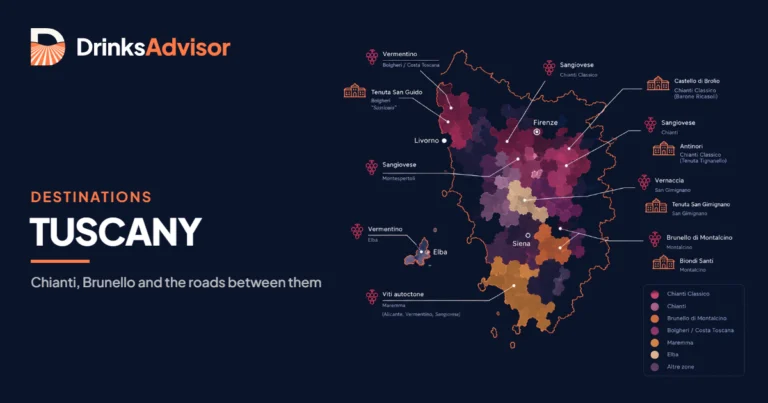
The absence of new Tuscan Snails does not mean Tuscany has lost its place in the guide. It means none of the 13 new 2027 recipients is Tuscan. If you want to make a useful route from the published names, start with the geography in our Tuscany wine country guide. Chianti and Montalcino reward separate days; folding both into one afternoon leaves little time for a real winery visit.
If you are based in Florence without a car, compare the structure of an organized day in our Chianti wine tours from Florence. Check the stops named by the operator before assuming any award-winning winery is included. A good trip can follow the award’s questions about place and production without treating a badge as a booking guarantee.
Three Tuscan winners where you can stay the night
An award says nothing about accommodation. Three of the Tuscan names, though, already appear in our lodging round-ups, chosen before the 2027 awards were announced, with rooms you can book through our partner.
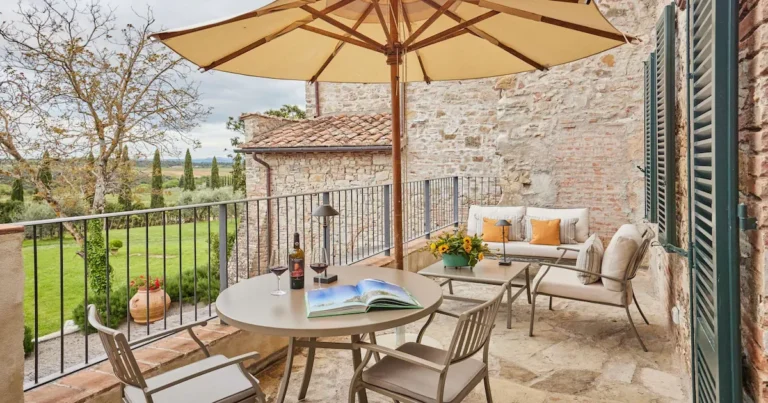
Badia a Coltibuono, a 2027 Snail, is a former abbey near Gaiole in Chianti where wine has been made since 1051; guests sleep in the old monks’ cells or in apartments in the abbey buildings. Castello di Meleto, which receives a 2027 Bottle, is also near Gaiole and has rooms and apartments in and around the castle, with tastings run from the estate shop. Both are in our guide to where to stay in Chianti.
In Montalcino, Le Ragnaie, another 2027 Bottle, runs a nine-room agriturismo a short drive from the town’s fortress and farms its vines organically. It is one of our Montalcino estates with rooms. The reverse does not hold: our eight vineyard hotels in Tuscany are working producers with rooms, but being in that selection does not imply a 2027 award.
Book it
Sleep at a 2027 Snail winery
Badia a Coltibuono has guest rooms inside its former abbey in Gaiole in Chianti. Compare dates and rates, then book the cellar visit with the estate.
How this guide differs from a wine score
A bottle score gives a compact answer about a particular wine in a particular vintage. Slow Wine’s winery symbols invite a longer question: what does this producer do well, how does it work and what can its wines offer for the price? The results can overlap with other Italian wine guides, such as Gambero Rosso Italian Wines 2027, whose Tre Bicchieri go to individual wines, but identical names on two lists would not mean their editors asked identical questions.
That is why the three 2027 symbols should not be read as an ordered podium. A Coin is not a consolation prize beneath a Bottle, and a Snail is not a guarantee that every release from the estate will suit your palate. The distinction is especially practical in a restaurant: the Coin can point you toward value, while the Bottle tells you the tasting panel found exceptional quality in the winery’s submitted wines.
For travel, there is a second filter that no guide can settle for you. A small family estate may offer visits by appointment only; a celebrated producer may have no public tasting schedule. Once a name catches your eye, check the producer’s own site for appointments, language and access. The closer a visit is to harvest, the more reason there is to confirm it directly; our guide to the best time to visit Tuscany wineries covers the calendar.
What happens in Milan on October 17
The full seventeenth edition is scheduled to be presented on Saturday, October 17, 2026, at SuperstudioMaxi in Milan. Slow Food also advertises a public tasting and the chance to meet the awarded producers and the wineries new to the guide. The award lists are already available, so the October occasion is the moment to examine the complete guide and taste beyond the headlines, not the first reveal of the Snails, Bottles or Coins.
In recent editions, the morning has been given to the national presentation and a conference, with the producers’ tasting running through the afternoon. Slow Food had not published the full 2027 timetable when we wrote this, so use the ticket link on its award announcements for current times and terms. If you are traveling from the United States, plan around the tasting date only after checking flight schedules, ticket availability and the opening hours of any wineries you hope to visit elsewhere in Italy.
The book should add the context an awards list cannot supply: winery entries, individual wine coverage and the editorial argument behind this year’s choices. Which bottles deserve a separate tasting plan, and which wines the guide marks as everyday-value picks, are questions to revisit once the full edition is in readers’ hands. We will update this same page with confirmed details after the launch.
Start with the symbol that matches the decision you actually need to make. The 247 Snails are a map of wineries whose work Slow Food wants readers to understand; the 173 Bottles point to outstanding tasted wines; the 56 Coins reward quality at a compelling price. For a Tuscan itinerary, narrow the 34 Snail names by location, then confirm access with the producer. When the complete guide arrives, its individual entries can turn that short list into a more informed trip.