Where to stay in Chianti comes down to a decision most travelers make too late: a village with restaurants you can walk to, or a working wine estate with rooms above the cellar. This list is the second kind. Seven producers between Greve in Chianti and the hills north of Siena rent rooms you can book directly through a booking partner, and every one of them bottles under its own label.
ⓘ We may earn a commission when you book through links on this page — at no extra cost to you. Affiliate Disclosure
In this article
How we chose where to stay in Chianti
Every property here makes wine commercially. Chianti is full of beautiful farmhouse hotels with vines outside the window, and a good number of them buy their wine from a neighbor. The seven below all bottle their own, and each appears either in the register of the Consorzio Vino Chianti Classico or on the estate’s own cellar pages.
Every one can be booked on Expedia, which is also where the photographs come from. Rates below are the nightly prices Expedia showed for two adults over two nights, April 13 to April 15, 2027, read on September 21, 2026. Spring is the fair comparison point: several of these estates close in winter, and August prices tell you more about August than about the property.
Guest ratings are reported, not used as a filter. Two of these estates have thin review counts, and a 9.6 from 49 reviews is a different animal from a 9.4 from 228. Both figures sit in every box below so you can weigh them yourself. Our reasoning on ratings, prices and photographs is set out in Our Editorial Methodology.
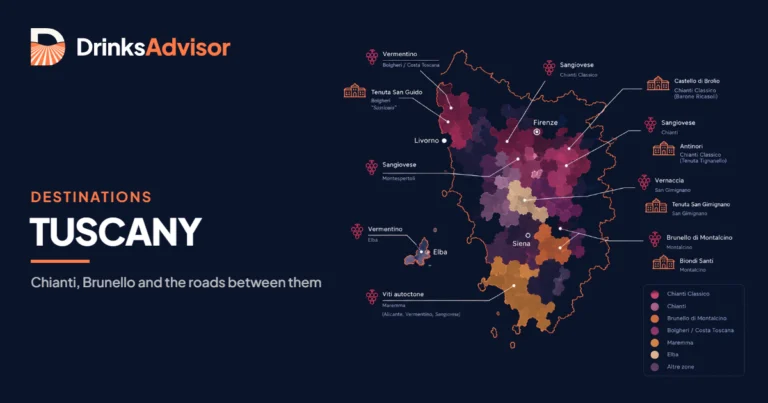
They are spread across the denomination. Geography does most of the work in deciding where to stay in Chianti: the drive from Greve to Castelnuovo Berardenga is under an hour on paper and a good deal longer in practice, on roads that were laid out for carts. The list runs north to south so you can pick a base and stop moving.
Greve in Chianti: the northern end
Greve is the first proper Chianti town you reach coming south from Florence on the SR222, and it is the one to choose if you want a short transfer and a market square at the end of the day. Greve, Montefioralle and Lamole are three of the eleven additional geographical units the consortium has mapped inside the denomination, which is a fair indication of how much the wine changes across a few kilometres of hillside here.
1. Borgo del Cabreo — Greve in Chianti
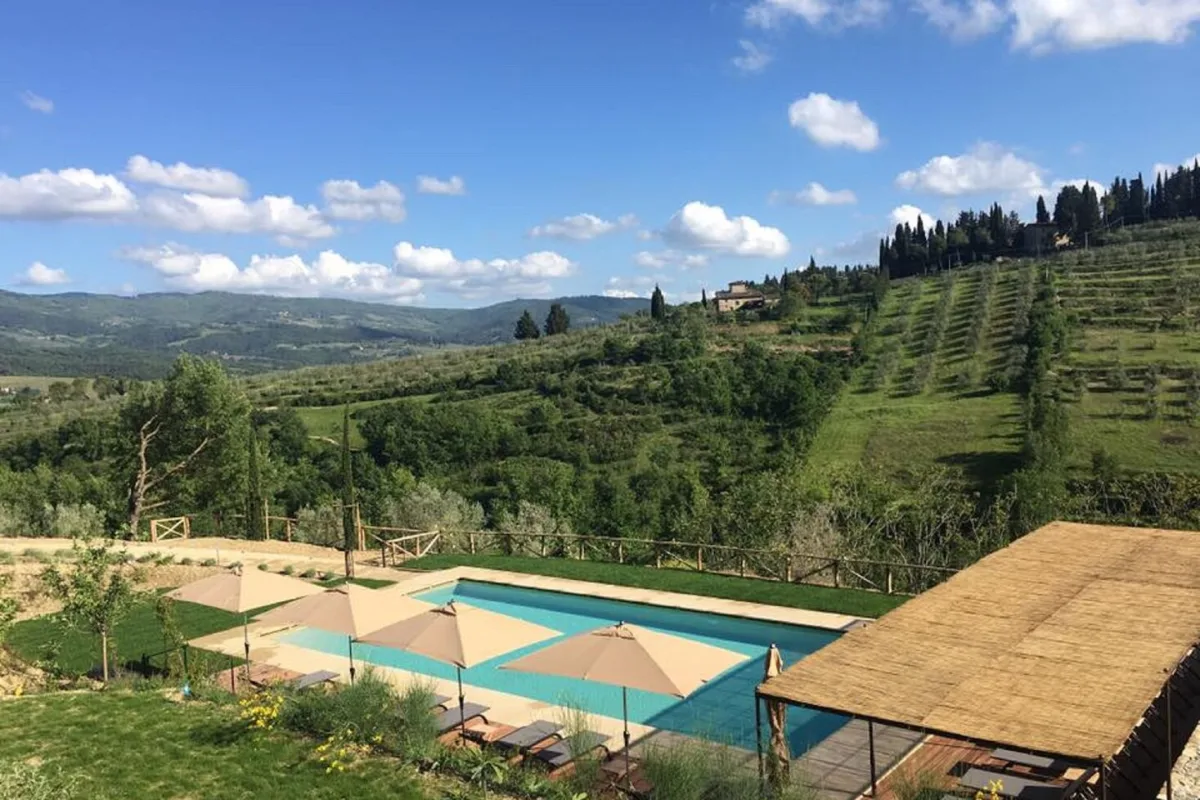
The name is the giveaway. Cabreo il Borgo is one of the wines of Tenute Ambrogio e Giovanni Folonari, and the relais takes its name from the bottle rather than the other way round. The house sits above the family’s vineyards and olive groves with a long pool on the terrace, and the eleven rooms sleep twenty-six people in total, which makes it the smallest property on this list by a wide margin.
That scale is the point. Breakfast is not a buffet in a converted barn, the pool is rarely contested, and the cooking classes run for whoever is staying rather than for a coach party. Tastings are booked at the Nozzole cellar, the headquarters of the Folonari estates a few minutes away, so the wine part of the stay takes a short drive rather than a walk downstairs.
Good to know
Check Availability on Expedia →
Castellina in Chianti: the ridge in the middle
Castellina sits on the watershed between the Elsa, Pesa and Arbia valleys, which is why its wines have a reputation for structure and why the village has a fortress rather than a market square at its centre. It is also the most central base on this list. Siena and Florence are each about an hour away, and the Gaiole and Radda estates are twenty minutes in the other direction.
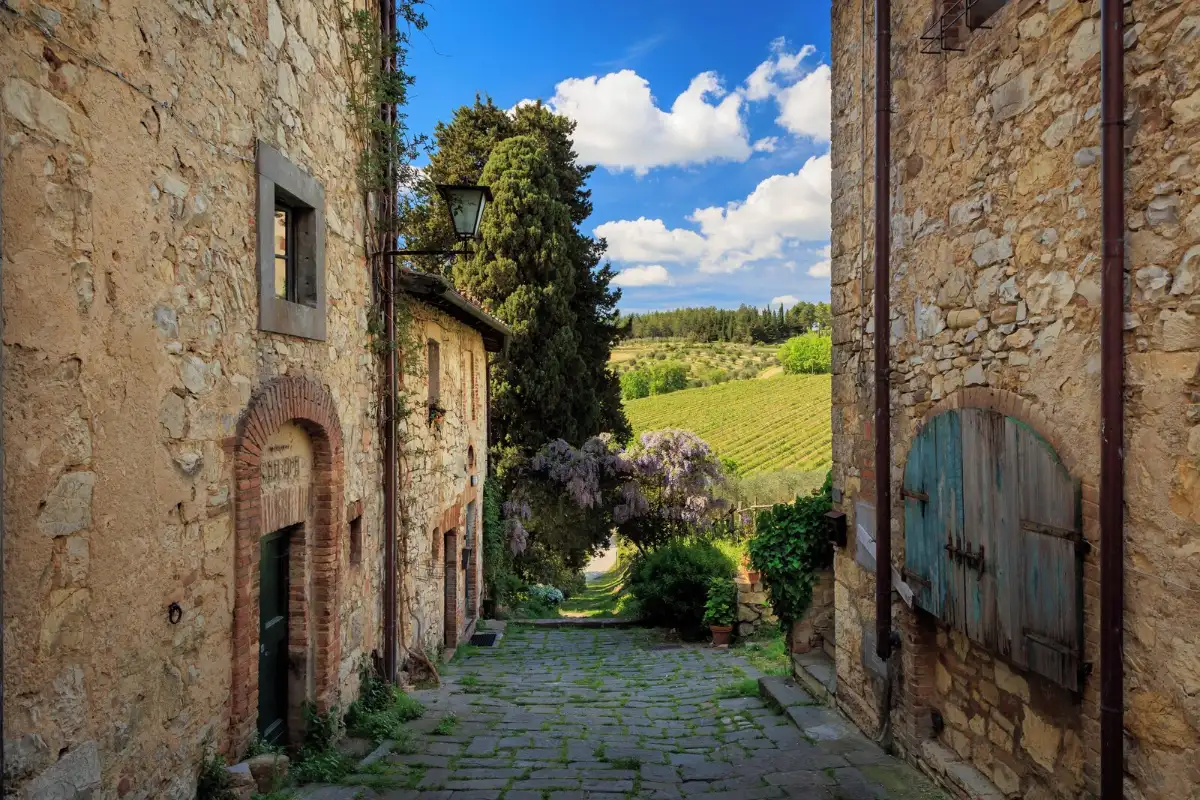
2. Castello di Fonterutoli — Castellina in Chianti
Fonterutoli is not a hotel with a vineyard attached. It is a hamlet, owned by the Mazzei family since the fifteenth century, where the rooms, the osteria, the wine bar and the cellar are simply different buildings on the same lane. The estate counts 650 hectares in total, with 110 vineyards split into 114 separate parcels between 220 and 570 metres of altitude, and the tasting menu is built around exactly that: the same grape from different heights.
For a first trip to Chianti this is the easiest of the seven to organise. You can take the regular cellar tour, the private tour, the food-and-wine version or the cru tasting, eat at the Osteria di Fonterutoli afterwards and walk back to your room. Nobody has to decide who is driving, which in this region is worth more than it sounds.
Good to know
Check Availability on Expedia →
Gaiole in Chianti: abbeys and castles
Gaiole is the wildest of the four historic Chianti communes, more forest than vineyard, and the estates here tend to be old institutions rather than farms: an abbey, a castle, a fortified village. It is also the furthest from an airport, which keeps the day-trip traffic down and makes an evening in the hills feel genuinely quiet.
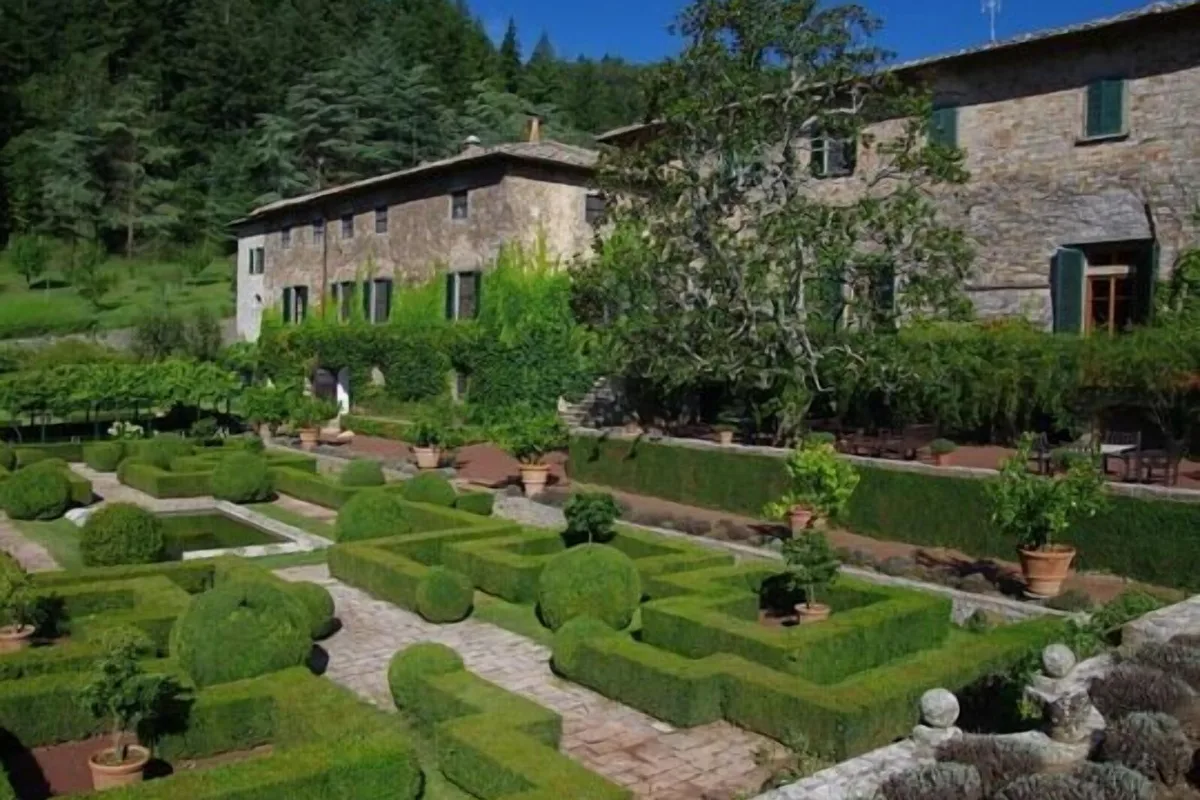
3. Badia a Coltibuono — Gaiole in Chianti
Wine has been made at Badia a Coltibuono since 1051, when the abbey was a working monastery, and the guest rooms are the monks’ cells with better mattresses. The Stucchi Prinetti family farms the vineyards and olive groves organically and holds around 800 hectares of old forest behind the buildings, which is the reason the property feels less like a wine estate than like a small settlement in a wood.
Come here for the cellar under the abbey and the cooking school, not for a resort. The restaurant sits in the garden with a view down the valley, guided walks leave from the door, and the tasting takes in the organic wines and the estate oil together. It has the fewest reviews of any property on this list, so read the rating with that in mind.
Good to know
Check Availability on Expedia →
Book it
Set on Radda, and nothing on this list is there?
Radda in Chianti is one of the four founding communes and one of the eleven mapped units, but none of its producers takes guests through our booking partner. If you want to sleep inside that particular amphitheatre of vines, the village is the answer. Compare what Radda has for your dates.
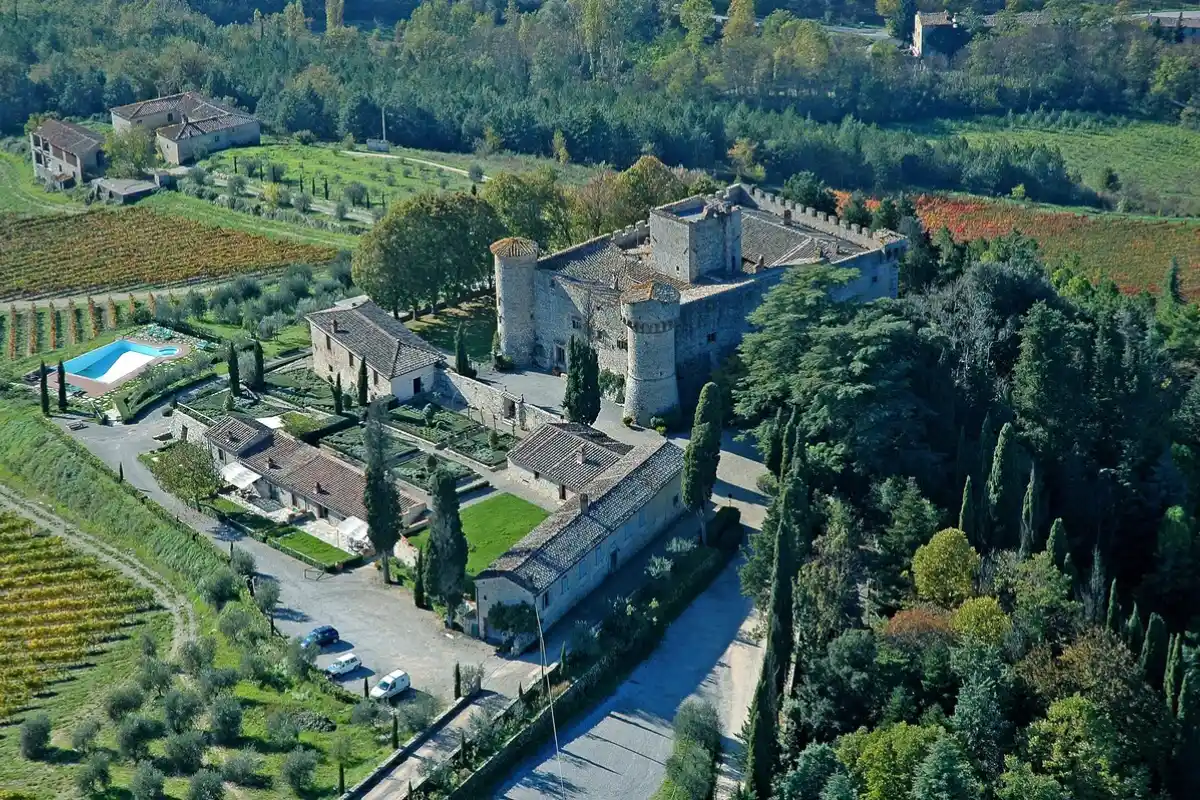
4. Castello di Meleto — Gaiole in Chianti
Meleto has been receiving visitors at Gaiole since 1256, and the castle still looks the part: round towers, a courtyard, a chapel, and a pool set out among the olives below. The estate farms seven named vineyards, Meleto, Casi, Trebbio, Poggiarso, San Piero, Cerreta and Parabuio, and bottles them separately often enough that a tasting here is a lesson in how much a slope matters.
It is also the cheapest room on this list by some distance, and the most variable. Accommodation is spread between the castle itself, apartments and villas, so what you get depends heavily on which unit you book; the 8.8 rating, the lowest of the seven, reflects that spread rather than the setting. Read the room description carefully and this is the best value in Chianti.
Good to know
Check Availability on Expedia →
Castelnuovo Berardenga: the Siena end
The southern corner of Chianti Classico is warmer, flatter and later to ripen than the hills above it, and Siena is close enough for dinner. Castelnuovo Berardenga and Vagliagli are both mapped units in their own right, and this is where the largest estates on the list are: three properties that could each absorb a wedding without anybody else noticing.
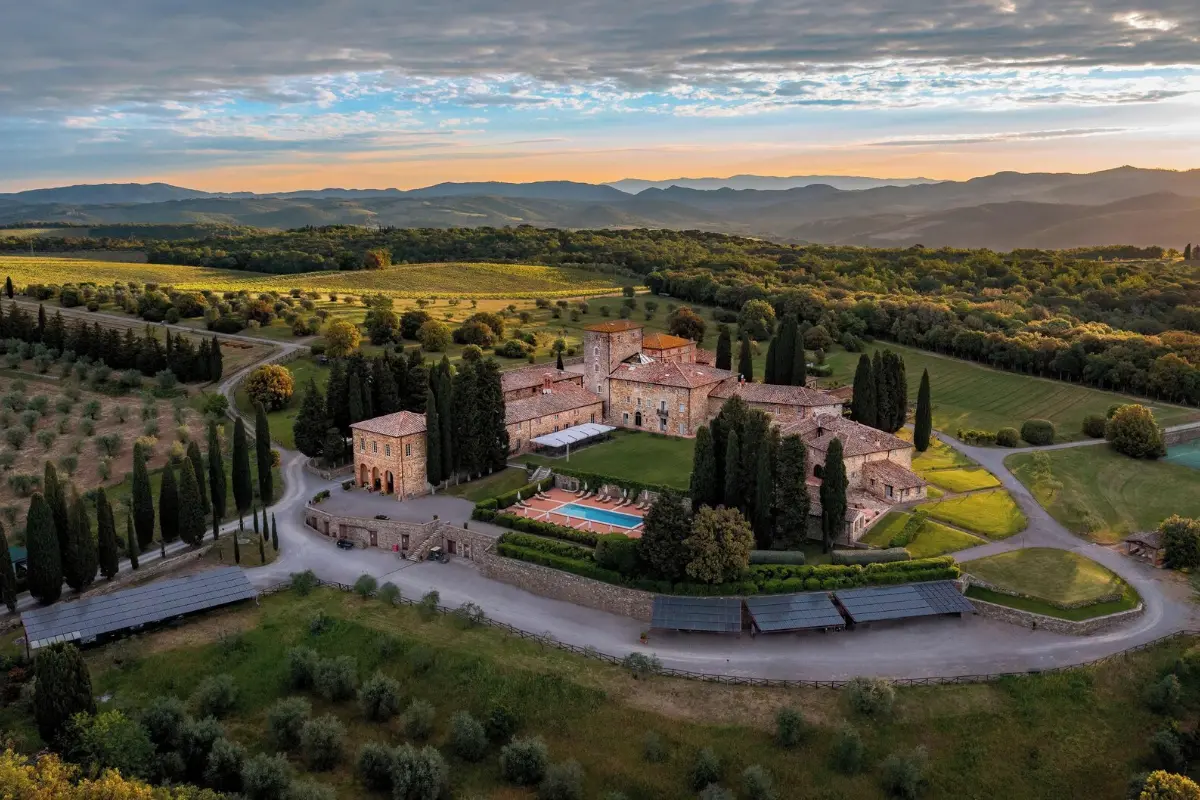
5. Borgo Scopeto Relais — Vagliagli
The first written mention of Borgo Scopeto dates to 1079, but the wine is modern: the estate started bottling in 1990 and was bought and restored by Elisabetta Gnudi Angelini in 1997. It makes Chianti Classico in both the annata and Riserva versions, a Vin Santo, and the red blend Borgonero, alongside a DOP olive oil.
What you notice on arrival is the space. The hamlet is set on its own hill with woods on three sides and a long approach through the estate, and the buildings have been restored as a relais rather than converted into a hotel block. It is the one on this list to pick if you want quiet and a pool and are happy to drive fifteen minutes for a restaurant that is not your own.
Good to know
Check Availability on Expedia →
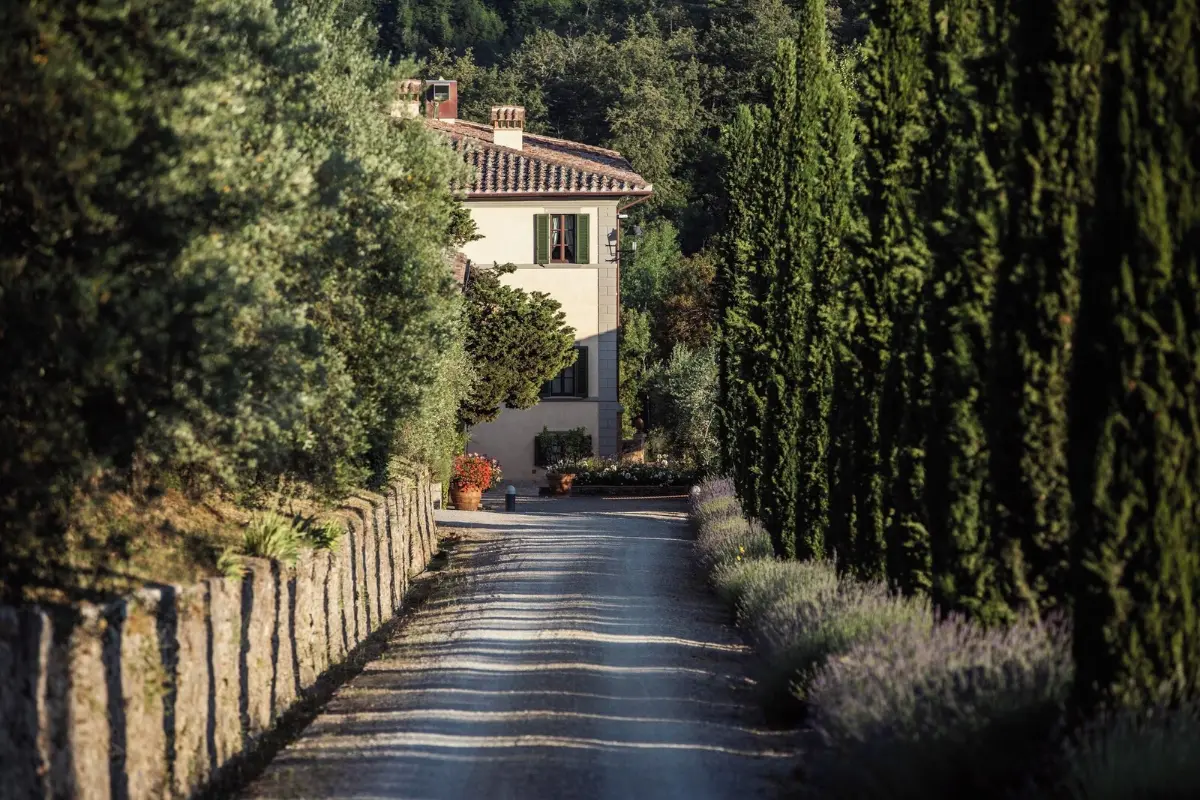
6. Dievole — Vagliagli
The cypress avenue is the photograph everyone takes, and it is genuinely the arrival: a kilometre of trees between the road and the villa. Dievole spreads 27 suites, apartments and double rooms across five farmhouses on an estate of nearly 400 hectares, with two panoramic pools and a restaurant in the historic villa.
It is the most flexible booking of the seven. Couples take a room in one farmhouse, families take an apartment in another, and neither group has to negotiate a shared breakfast room. The estate also presses its own Nocellara olives, and an oil tasting is usually easier to arrange at short notice than a cellar visit in the middle of harvest.
Good to know
Check Availability on Expedia →
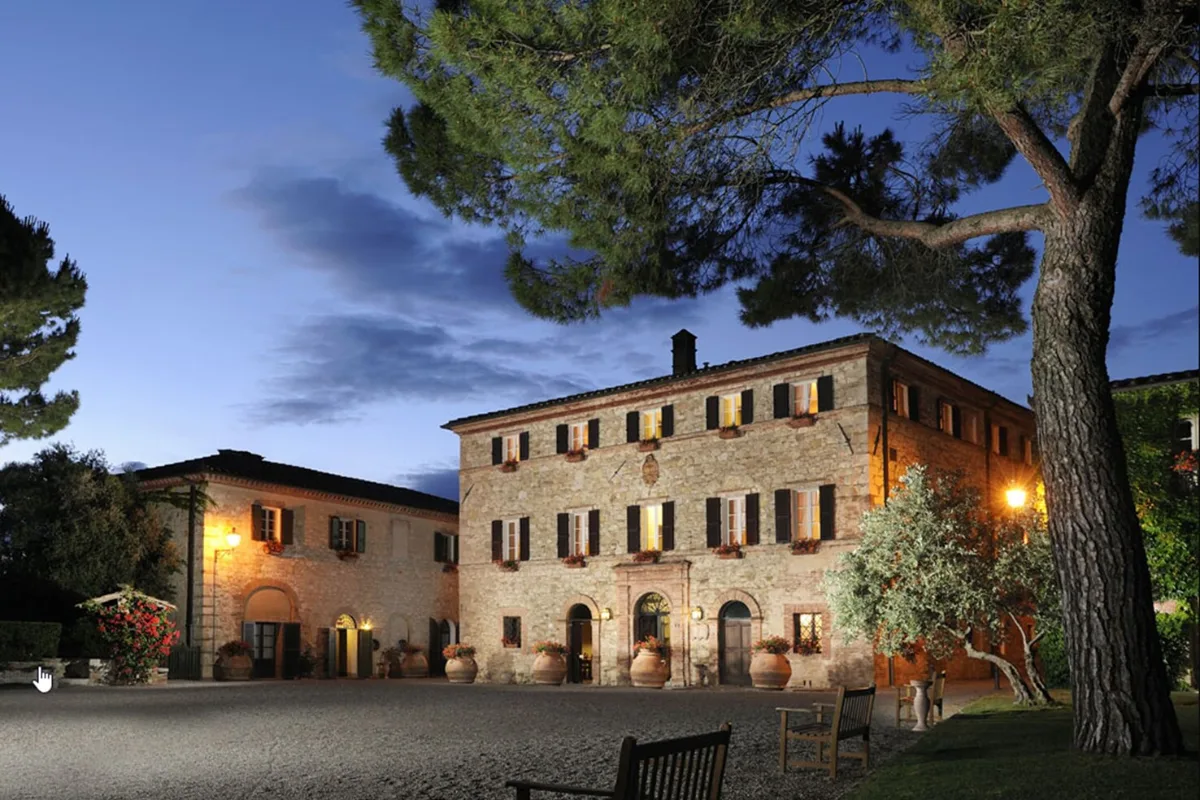
7. Borgo San Felice — Castelnuovo Berardenga
San Felice is the expensive one, and it is expensive for reasons you can list. The hotel occupies an entire restored hamlet and calls itself Chianti’s first Relais & Châteaux. It has two restaurants, the Michelin-starred Poggio Rosso under chef Stelios Sakalis and the simpler Osteria Il Grigio, a Botanic Spa that does vinotherapy treatments, and two private villas, Villa Casanova with nine bedrooms and Villa Colonna with two.
The wine estate is the other half of the argument. San Felice bottles from Chianti Classico, Montalcino and Bolgheri, and the property presents its Vigorello as the first Super Tuscan, a claim other estates dispute but one you can taste and judge on the spot. If a single splurge night is the plan rather than a week, this is where to put it.
Good to know
Check Availability on Expedia →
Book it
Would you rather walk to dinner than drive?
Every estate above is out in the country, which is the appeal and also the catch. Greve in Chianti has the largest choice of rooms in the denomination and a square full of restaurants, butchers and wine shops you can reach on foot. Compare what Greve has for your dates.
When to book
Chianti has two obvious seasons and one quiet secret. May and June give you long light, open pools and vineyards in flower, and they are the months these estates sell out first; September and early October bring the harvest, which means tractors on every white road, cellars that smell of fermentation, and tasting rooms that are busier than usual with people who actually care. Our guide to the best time to visit Tuscany’s wineries goes through the trade-offs month by month.
The secret is late April. Prices at four of the seven properties above are noticeably lower in mid-April than in mid-May for what is often identical weather, and the cellars have time for you. The catch is that some pools and restaurants do not open until May, so read the property page first. Book early either way: these are small places, and a single wedding can take a whole estate off the market for a weekend.
Getting there
Florence airport is the obvious arrival for the northern half of this list and Pisa is the cheaper option from the United States with a change; Siena has no commercial airport. From either, the drive south is straightforward until you leave the main road, at which point the last few kilometres to most of these estates are gravel.
You can reach Greve and Castellina by bus from Florence, and you can reach nothing else on this list without a car. If driving is not the plan, the alternative is to base yourself in Florence and take a guided Chianti wine tour from Florence instead, then keep the estate stays for a trip when you have wheels.
Compare car rental in Florence on DiscoverCars →
Choosing between them
Work backwards from how much driving you are willing to do. Fonterutoli is the only property here where the cellar, the restaurant and the bed are on the same lane, which makes it the easy answer for a first trip and for anyone who wants to taste properly without appointing a designated driver.
After that it is a question of what you want the estate to be. Badia a Coltibuono and Castello di Meleto are history you can sleep inside, at the two most reasonable prices on the list. Borgo del Cabreo is the small one, Borgo Scopeto and Dievole are the spacious ones, and Borgo San Felice is a different category of holiday with a Michelin kitchen and a spa to match the bill.
Whatever you pick, the answer to where to stay in Chianti changes the shape of the trip more than the wine list does. If you are still deciding between regions, start with our guide to Tuscany wine country, and if you want a wider set of Tuscan estates with rooms, including Montalcino and the coast, see the best vineyard hotels in Tuscany.
Prices are indicative and set by our booking partners; all rates and guest ratings were read on Expedia on September 21, 2026, for a two-night stay from April 13 to April 15, 2027.