The port wine cellars in Porto are not in Porto at all. They line the opposite bank of the Douro, in Vila Nova de Gaia, where the old shipping houses still age their wine in long, dim lodges a few steps from the water. Crossing the bridge to taste is the easiest wine experience in Portugal, and also the easiest to get wrong. These seven tours cover the range, from a self-guided visit at Taylor’s to a ten-person tasting in Graham’s Vintage Room.
ⓘ We may earn a commission when you book through links on this page — at no extra cost to you. Affiliate Disclosure
In this article
How we chose these port wine cellars in Porto
Gaia has dozens of lodges open to visitors, and most of them sell a version of the same hour: a walk past the casks, a short film or museum room, two or three glasses at the end. We kept the ones that give you something the others don’t, whether that is a rare cellar, a working cooperage, a better tasting room or a smaller group.
Three rules decided the list. Every visit takes place inside a lodge that still ages Port, not a tasting bar. Every listing names what you drink, or we say plainly when it doesn’t. And every tour can be booked online with free cancellation, so you can plan the evening around it without risk. Ratings come from the booking platforms and are shown with the number of reviews behind them, because a 5.0 from six travelers tells you much less than a 4.6 from five thousand.
How the Gaia lodges work
For more than two centuries, Port was made in the Douro Valley and then sent downriver to age in Gaia, where the cooler, damper air by the sea slows the wine down. The lodges (the local word is caves) are the warehouses where that aging still happens: long granite halls full of seasoned oak pipes and tall vats. Until 1986 Port could only be shipped to the world from here, which is why every big name, from British houses like Taylor’s and Graham’s to Portuguese ones like Cálem and Poças, has its address on this hill.
A visit teaches you the four styles you will meet at every tasting. White Port is the aperitif, often served with tonic. Ruby styles, including Late Bottled Vintage (LBV), age a few years in large vats and stay dark and fruity. Tawnies age for years in small casks and turn amber, nutty and dry on the finish, with the age on the label (10, 20, 30, 40 years) as an average. Vintage Port comes from a single declared year and needs decades in the bottle. The body that certifies all of them, the Douro and Port Wine Institute, has its own tasting room in Porto if you want a neutral comparison.
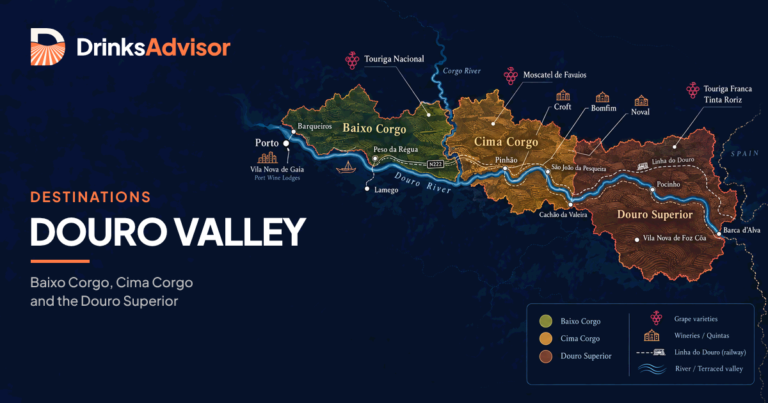
If you are planning more than an afternoon in Porto, our Douro Valley wine country guide explains where these wines are actually grown, about an hour and a quarter upriver by road.
The big names on the hill
1. Taylor’s Port Cellars and Tasting
Taylor’s has been making Port since 1692, and its lodge feels like the old money of Gaia, with gardens and a terrace looking straight across the river at Porto’s Ribeira. The visit is self-guided, with an audio guide on your own phone, which suits travelers who would rather linger in the cask halls than follow a group. The tasting at the end covers three of the house’s core styles side by side, a useful first lesson.
The limit is the climb. The lodge sits well up the slope from the riverfront and the listing warns about steep, uneven ground, so allow time and wear real shoes. Book a late-afternoon slot and stay for a glass on the terrace; Taylor’s own site lists the house’s full range if you want to buy afterwards.
Good to know
2. Graham’s Port Lodge and Vintage Room Tasting
This is the one to choose if Port is the point of your trip. Graham’s lodge was built in 1890 on a ridge above the river, and the guided visit walks through a working cellar of more than 2,000 oak pipes and 40 large vats before you sit down in the Vintage Room, a wood-paneled space laid out like an old library. Groups stop at ten people, so the guide has time for questions.
You choose between a standard tasting and a Super Premium one featuring Ports and tawnies, and that choice drives the price. It is the most expensive visit on this list and runs in English only. Pair it with dinner on the Porto side rather than a second lodge: after the Super Premium flight, a second tasting adds little.
Good to know
3. Cockburn’s Port Lodge Tour and Tasting
Cockburn’s is the lodge for people who want to see the work, not just the barrels. It holds more than 6,500 seasoned oak pipes, stacked four high along what the house describes as the longest aging gallery in Gaia, and it still keeps its own coopers on site, taking casks apart stave by stave and putting them back together. A small museum covers two centuries of the families behind the brand.
Go on a weekday morning if you can: the coopers work Monday to Friday, from 9:00 to 4:30, and the visit loses its best scene outside those hours. The classic tasting is three Ports; the premium option pairs them with chocolate. Tours run in five languages, which makes it the easiest booking for a mixed group.
Good to know
Book it
Comparing more lodges? GetYourGuide lists tours at Sandeman, Ferreira, Fonseca, Burmester and other Gaia houses.
All Port tastings in Vila Nova de Gaia in one search, filtered and ready.
Older houses and family cellars
4. Royal Oporto Tour and Tasting at Real Companhia Velha
Real Companhia Velha is one of the oldest wine companies in Portugal, and this tour shows it. Beyond the usual cask halls, you are taken into the private cellar of the Silva Reis family, who own the company: more than 16,000 bottles of rare Vintage Port, the oldest dated 1765. Few visits in Gaia put that much history within arm’s reach.
The listing doesn’t say how many Ports you taste, so treat the tasting as a coda rather than the main event. A private option is available for couples or families. The same company owns Quinta das Carvalhas in Pinhão, so this is a natural prologue if you are heading upriver; its website covers both.
Good to know
5. Poças Guided Visit and Tasting of Three Ports
Poças is the counterweight to the British houses: a Portuguese family firm now in its fourth generation, with a quieter lodge set back from the riverfront crowds. The guided visit goes through an aging cellar holding Ports up to a century old, then sits you down for three glasses in the tasting room. It feels less like an attraction and more like being shown around a working business.
Groups can reach 20, so it is not intimate, but the pace is relaxed. You can add a board of cheese or cured sausage for a few euros more, which turns the tasting into an early dinner. The walk from the quay is short and flat compared with the climb to Taylor’s.
Good to know
Port with music or a guide
6. Cálem Cellar Tour, Fado Show and Tasting
Cálem’s lodge sits right on the Gaia quay, and its evening visit adds something no other cellar here does: a short guided tour and museum, then a live fado set, the mournful Portuguese song style, in a small hall among the casks. It is the most theatrical hour on this list, and the one people remember for the music rather than the wine.
Be clear on what you get in the glass: two Ports, chosen for you. The English-language session runs once each evening, at 6:00 from November to March and 6:30 from April to October, and cancellation closes three days ahead, earlier than on the other tours here. Book it for your first night, then come back for a serious tasting elsewhere.
Good to know
7. Port Wine Lodges Walking Tour With 7 Tastings
If you would rather compare houses than pick one, this half-day walk does the choosing for you. You meet a guide on the Porto side by the Dom Luís I Bridge, cross on foot, and visit several lodges plus an interactive museum, with seven Ports poured along the way and lessons on how to tell the families of Port apart.
It is the best value per glass in Gaia and the only tour here that takes care of the logistics between cellars. The trade-off is depth: you see more lodges and spend less time in each, and you don’t choose which ones. Seven tastings in three and a half hours is a lot, so eat beforehand; lunch is not included.
Good to know
Booking, timing and getting to Gaia
From Porto’s Ribeira, the lower deck of the Dom Luís I Bridge puts you on the Gaia quay in about five minutes on foot; the upper deck carries metro line D to the Jardim do Morro stop, at the top of the hill. Most lodges are a short walk from the quay, but Taylor’s and Graham’s sit higher up, so plan the order of your day downhill rather than up.
Book ahead from May to October and on weekends all year: the busiest port wine cellars, Taylor’s, Graham’s and Cálem, fill their timed slots first. Two lodges in an afternoon is plenty. Port is fortified to around 20 percent alcohol, and three tastings of three glasses each adds up quickly.
If you love what you taste and want bottles at home, our guide to shipping wine home to the US explains what you can send and what it costs to clear customs.
Where this fits in a Douro trip
A visit to the port wine cellars in Porto is the start of the story, not the whole of it. The grapes come from the terraced quintas upriver, and seeing them changes how a tawny tastes. The easiest next step is a day trip: our selection of Douro Valley wine tours from Porto covers small-group days with tastings, lunch and a river cruise, and the Douro river cruise guide explains the longer voyages.
If you have more time, stay a night or two in the valley itself. Our round-up of where to stay in the Douro Valley lists quintas with rooms among the vines, from Régua to Pinhão, where several of the Gaia houses own the estates whose wine you just tasted. Once you are there, our guide to Douro Valley wineries covers the quintas worth visiting.
Prices are indicative and set by our booking partners.