Where to stay in Douro Valley is a bigger decision than it looks, because the valley runs from Peso da Régua all the way to the Spanish border, and the road between its quintas is slow, steep and beautiful. Pick the wrong end and you spend the trip in the car. These eight wine estates and hotels, from a Six Senses spa to a family quinta above Pinhão, are where we would sleep.
ⓘ We may earn a commission when you book through links on this page — at no extra cost to you. Affiliate Disclosure
In this article
How we chose where to stay in Douro Valley
Three rules cut the field. Every place on the list is on Expedia, so you can book it through the links below and see the same rates we did. Every one is a working wine estate or sits among the vineyards, close enough to the river that a cellar visit does not mean an hour on mountain roads. And every one had enough guest reviews, or a verifiable outside source, for us to say something specific about it.
We grouped them by the three subregions of the UNESCO-listed Alto Douro wine region, because that is how the distances work. The Baixo Corgo around Régua is the closest to Porto; the Cima Corgo around Pinhão is the heart of Port country; the Douro Superior is the remote, hot stretch toward Spain. Our Douro Valley wine country guide explains how the three differ before you choose a base.
Baixo Corgo: Peso da Régua and Lamego
The western end of the valley is about an hour and a quarter from Porto by motorway, and it has the most hotels. Régua is the market town and the railway stop; Lamego sits in the hills on the south bank. The terraces here are greener and gentler than upstream, and the wineries are close together.
1. Six Senses Douro Valley — Lamego
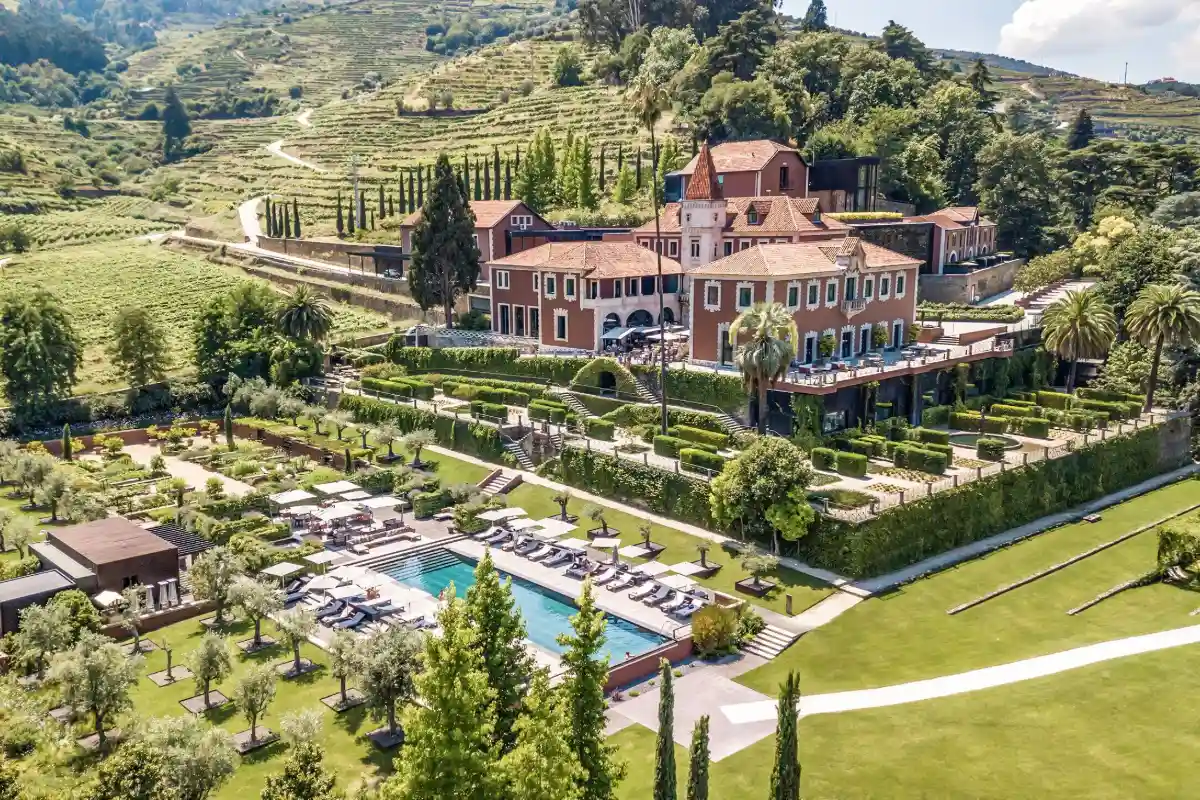
This is the splurge of the valley, and the one hotel here where the spa is as much the reason to come as the wine. It occupies Quinta de Vale Abraão, a 19th-century manor on the south bank above the river, and the gardens step down the slope in terraces toward the water. Most rooms look across the valley rather than at a vineyard, which is the trade for a full resort.
It suits couples who want to do two cellar visits a day and then stop thinking. The limit is the price, and the sense that you could be at any very good resort once the gate closes. For wine, Régua and its quintas are a short drive away.
Good to know
Check Availability on Expedia →
2. The Wine House Hotel, Quinta da Pacheca — Lamego
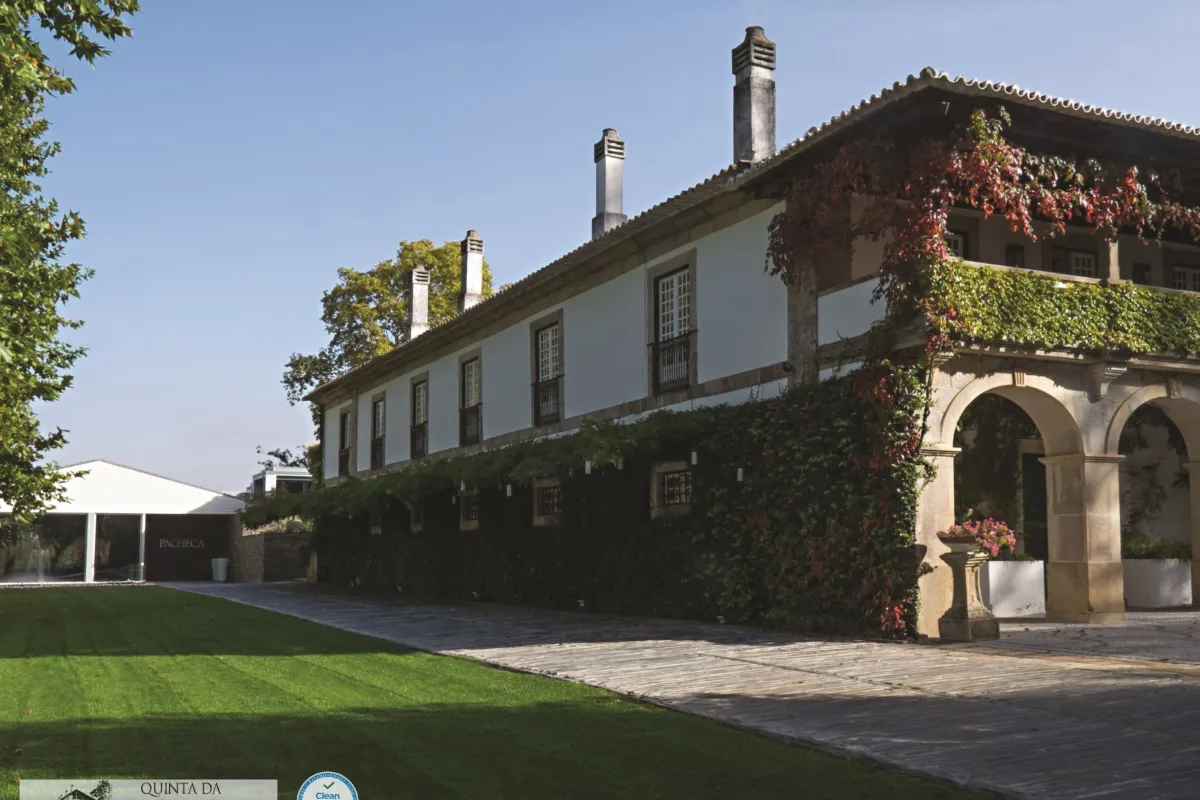
Quinta da Pacheca is the place people photograph for one reason: you can sleep inside a giant wine barrel set among the vines. The barrels are only part of it. There is an 18th-century manor with traditional rooms, a modern wing, and a working winery that welcomes visitors all day.
It works best for a first Douro trip, when you want the wine estate experience in one place and do not mind sharing it with day visitors who come for tastings and lunch. The barrels are small, so book a manor or modern room if you plan to spend time indoors. Régua is just across the river.
Good to know
Check Availability on Expedia →
3. Quinta do Vallado — Peso da Régua
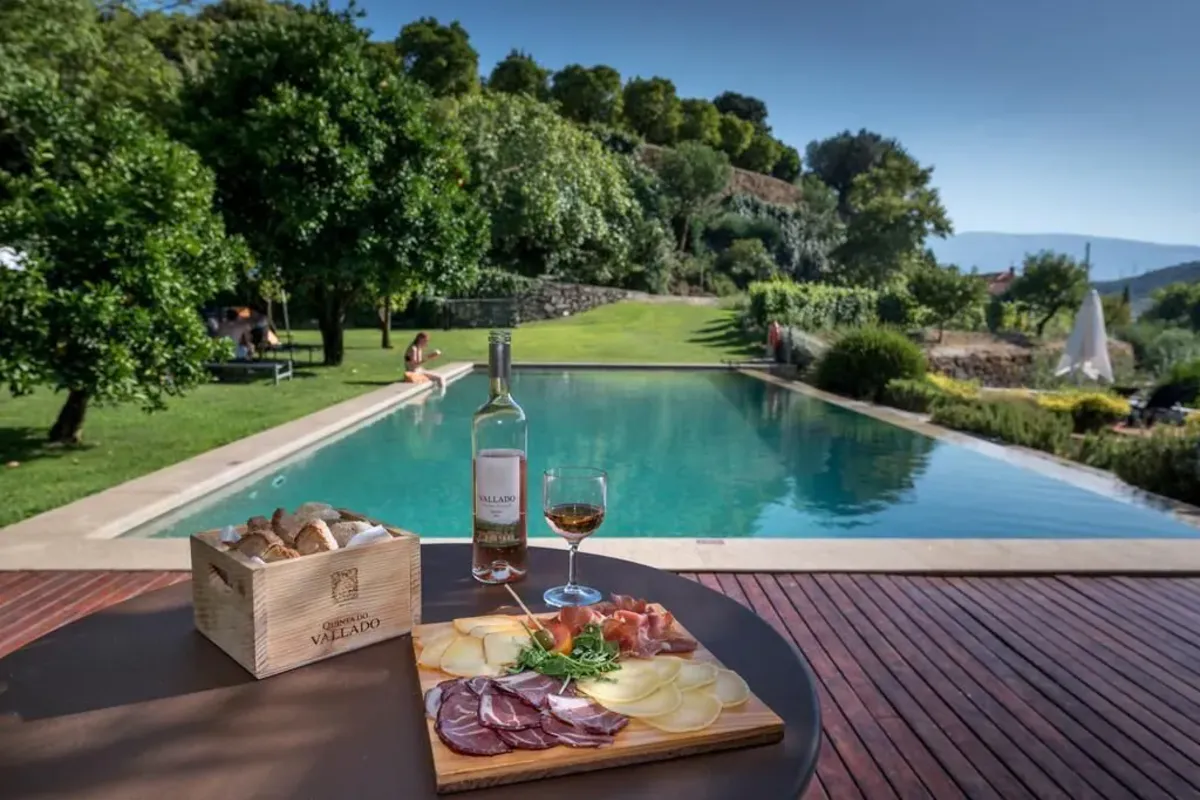
Vallado is the wine estate for travelers who would rather talk to the people who make the wine than be looked after by a resort. It is one of the oldest quintas in the valley, and its hotel is small: a handful of rooms in the old manor and a slate-clad modern wing on the hill above the Corgo.
It is quiet in the evenings and that is the point. The limit is food: there is no restaurant open every night, so dinner means booking ahead or driving down to Régua. Come in spring or at harvest; the hotel closes in January.
Good to know
Check Availability on Expedia →
4. Torel Quinta da Vacaria — Peso da Régua
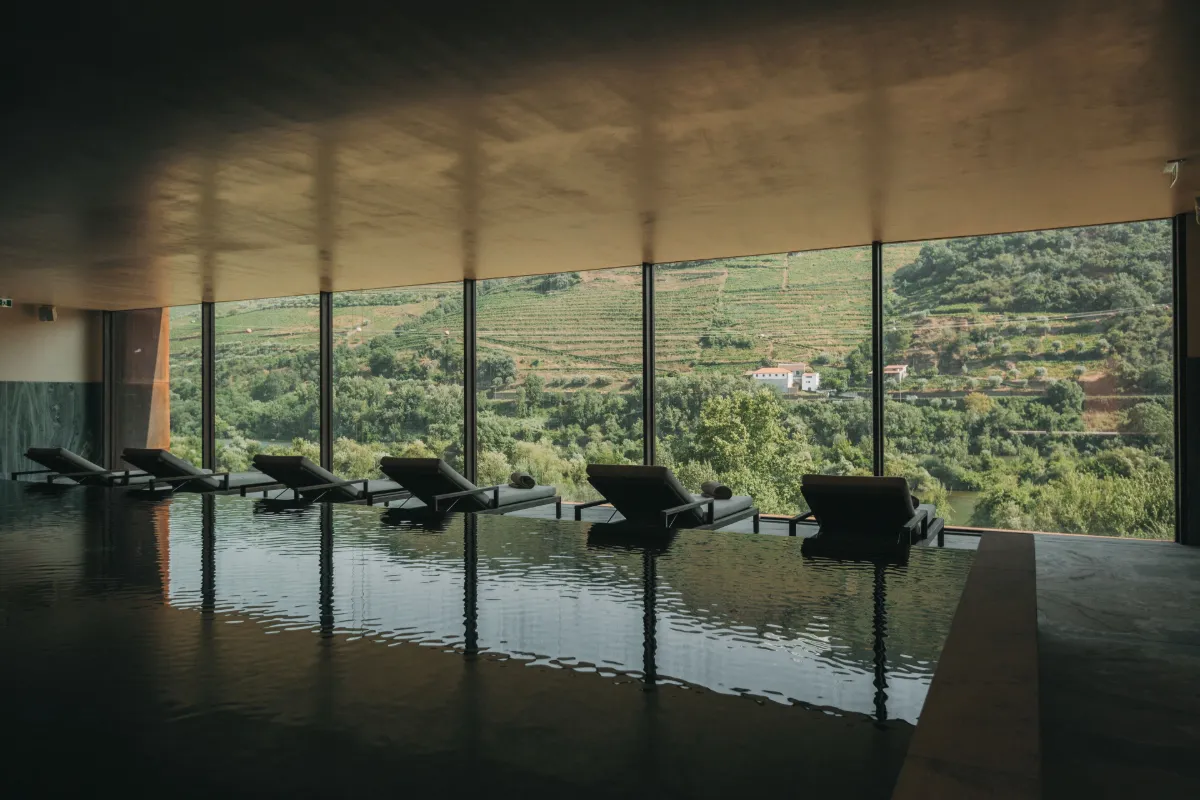
The newest name on the list sits on one of the oldest estates: Quinta da Vacaria has been making wine since 1616, and the Torel group turned it into a five-star hotel with interiors by the designer Joana Astolfi. Rooms take their themes from the landscape outside, and the glass walls of the spa frame the terraces like paintings.
Choose it for design and calm, and for a hotel that still feels attached to a wine estate rather than built beside one. The limit is that it is young, so the restaurant and the wine program have less of a track record than at Vallado or Pacheca. The vineyards start at the door.
Good to know
Check Availability on Expedia →
Book it
The quintas fill before the harvest
Several estates on this list have only a handful of rooms, and September and October book out first. If your dates are fixed, see everything available along the river on one screen before you choose.
Cima Corgo: Pinhão and the heart of Port country
Upstream of Régua the valley narrows and the terraces climb higher. Pinhão, a village at a bend of the river, is surrounded by some of the best-known Port quintas, and it has a station on the Douro line from Porto. This is where most travelers picture the Douro, and where a car matters most.
5. The Vintage House — Pinhão
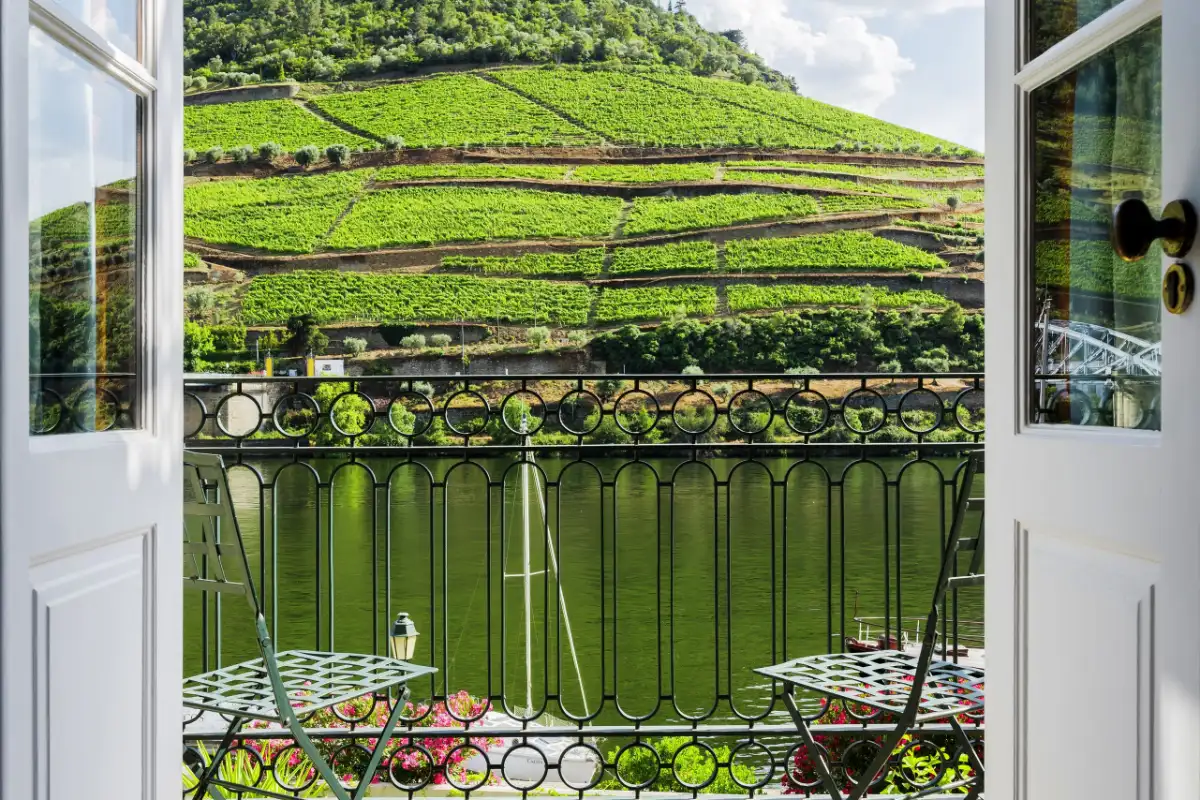
The Vintage House is the only hotel on this list where you can walk out of the lobby and onto the riverbank. It occupies an 18th-century wine estate building right on the water in Pinhão, and the best rooms open onto small balconies facing the terraced hills across the river.
Pick it if you want to arrive by train and do without a car for a day or two: Pinhão has a station on the Douro line, and boat trips leave from the village. The limit is that it is a hotel in a village, not an estate among the vines. Book a river-view room; that is what you are paying for.
Good to know
Check Availability on Expedia →
6. Quinta de la Rosa — Pinhão
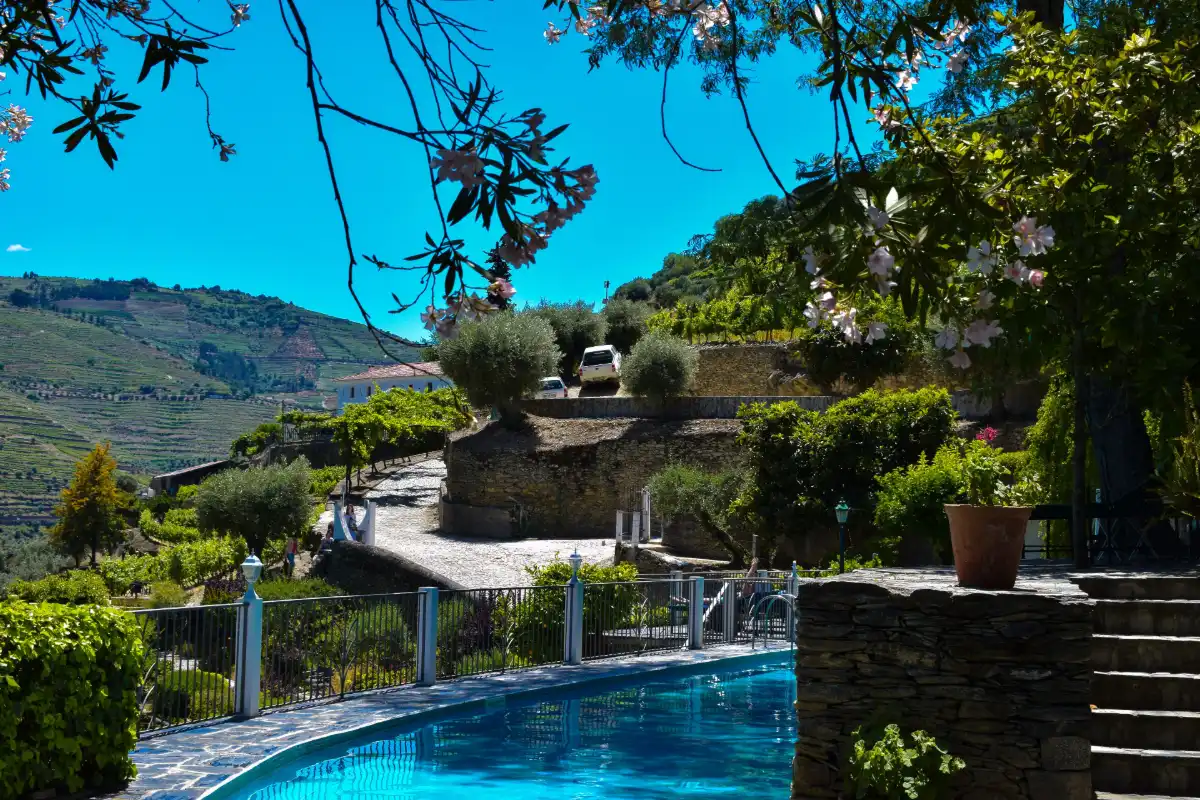
Quinta de la Rosa is the family estate on the list, and it feels like one. The quinta has belonged to the Bergqvist family since 1906, when it was given as a christening present, and it makes both Port and Douro table wines a short walk from the rooms. In the evening the kitchen cooks with vegetables from the estate garden.
It suits travelers who want to stay in the middle of Port country at a sensible price and do not need a spa. The limit is the slope: the pool and the gardens are reached by many steps, which is worth knowing with small children or with anyone who finds stairs hard. Pinhão is just downhill.
Good to know
Check Availability on Expedia →
7. Ventozelo Hotel & Quinta — São João da Pesqueira
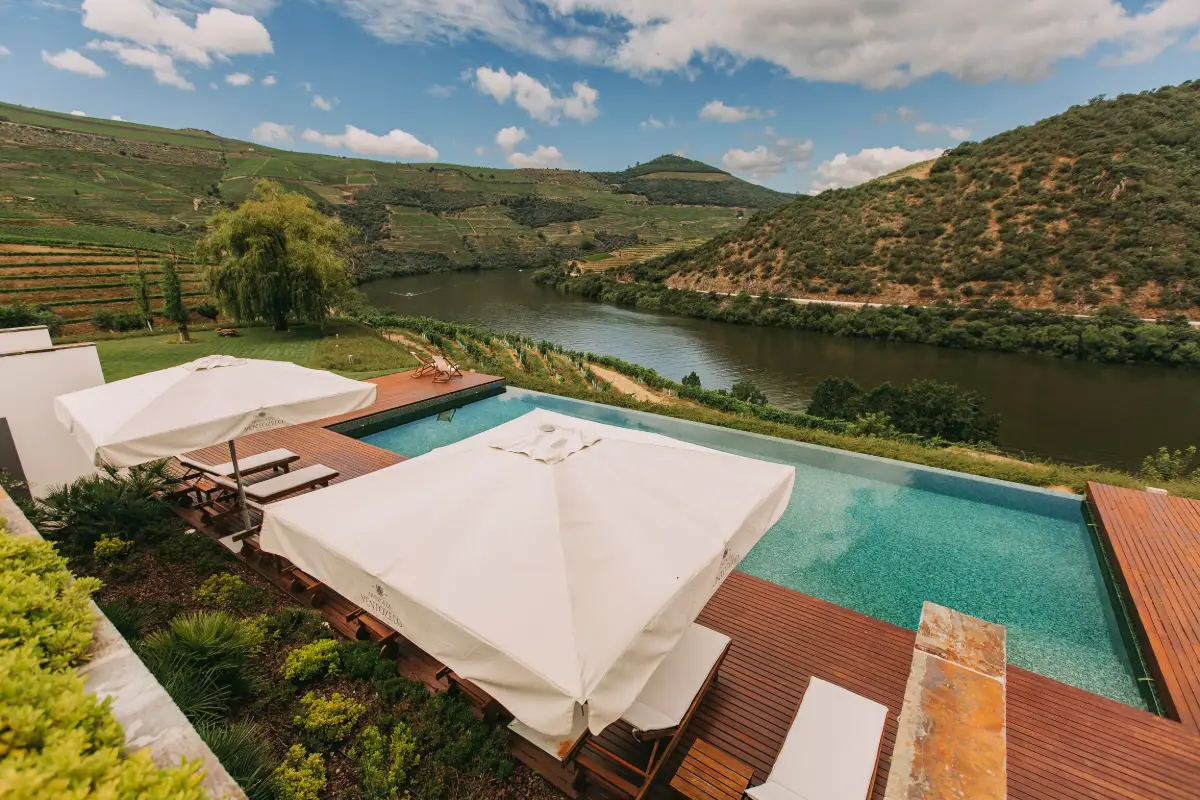
Ventozelo is the one to choose if you want to wake up inside a working Douro landscape rather than look at it. The quinta is one of the oldest in the demarcated region, with vineyards documented since the 17th century, and the hotel is spread across its restored 18th-century farm buildings.
It is for walkers and for people who like a quiet estate to explore, among terraces and olive groves that run down to the river. The limit is distance, since Pinhão is a winding drive away and evenings are spent on the estate. Come for two nights at least, or the drive eats the stay.
Good to know
Check Availability on Expedia →
Douro Superior: the quiet end toward Spain
Farther east the valley turns drier and emptier, with almond and olive trees among the vines and very few hotels. It is the farthest stretch from Porto, so it rewards a longer stay rather than a weekend.
8. Casa do Rio Wine Hotel, Vallado — Vila Nova de Foz Côa
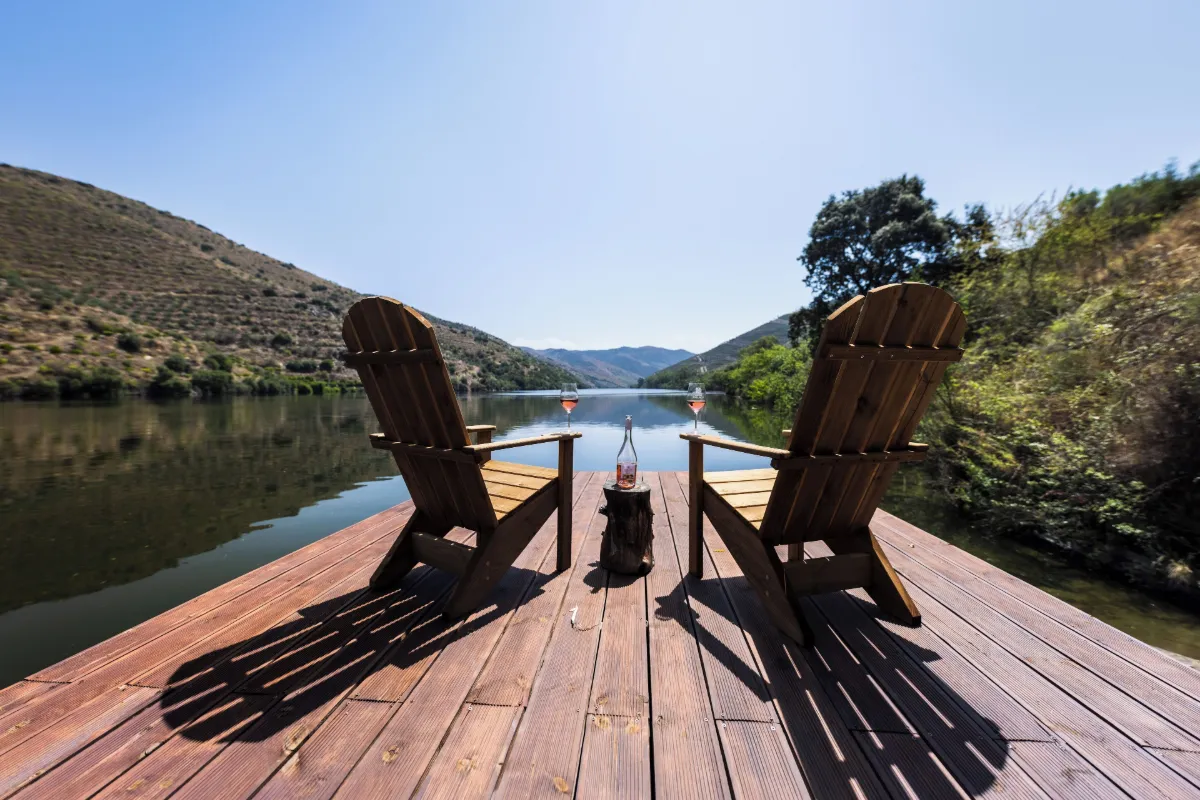
Casa do Rio is the Douro at its most remote, and the reason to make the drive. Quinta do Vallado built it as a small sister hotel above a gorge of the river, about 13 kilometers from Vila Nova de Foz Côa, and every room looks out through floor-to-ceiling glass at the water.
It is for travelers who have already seen Pinhão and want silence, a canoe and a book. The limit is that it has few Expedia reviews so far, and that you are a long drive from everything else on this list. Bring a car, and plan on two nights at least.
Good to know
Check Availability on Expedia →
When to book where to stay in Douro Valley
The harvest usually runs through September and into October, and it is the best and busiest time to come: the terraces are full of pickers, and several estates still tread grapes by foot in stone lagares. Rooms at the small quintas go months ahead for those weeks, so book as soon as your dates are firm.
Spring is the quieter alternative. From April the vines turn green, the river is calm for boat trips, and rates are lower. July and August are very hot inland. Whenever you go, the Port and Douro Wines Institute is the official source on the appellations you will be tasting.
Getting there
Porto airport is the gateway. Régua is about an hour and a quarter by car on the A4 motorway; Pinhão is a little farther, then a winding road down to the river. The Douro railway line from Porto stops at Régua and Pinhão, which makes The Vintage House and the Régua estates possible without a car, but to reach Ventozelo or Casa do Rio, or to visit several quintas in a day, you will want one.
Portugal’s drink-driving limit is 0.5 g/l, and 0.2 g/l for new drivers, so plan spitting, a designated driver or a hired driver on tasting days. Our guide to renting a car for a wine trip in Europe covers insurance and what to check at the counter.
Compare car rental in Porto on DiscoverCars →
Choosing between them
For a first trip of three or four nights, split it: two nights in the Baixo Corgo, at Vallado, Pacheca or Torel, and two in Pinhão, at The Vintage House or Quinta de la Rosa. That puts you near the two clusters of quintas without crossing the valley twice a day. If spa time matters as much as the wine, Six Senses is in a class of its own.
For a longer stay or a second visit, add Ventozelo or Casa do Rio, which are about the estate and the landscape more than the sights. And if you are buying wine along the way, our guide to shipping wine home to the US explains what you can send and what it costs.
Prices are “from” rates, indicative and set by our booking partners: they change with dates and availability, so check the current rate on Expedia.