Barolo vs Barbaresco is the first choice most wine travelers face in Piedmont, and it is a closer call than the price lists suggest. Both are Nebbiolo, both sit in the Langhe hills a short drive from Alba, and both reward an unhurried visit. The differences lie in scale, pace and how the wines drink when young. Here is how to pick, or how to fit both into one trip from the Piedmont wine region guide.
ⓘ We may earn a commission when you book through links on this page, at no extra cost to you. Affiliate Disclosure
- Grape
- Nebbiolo, 100%, in both wines
- Barolo zone
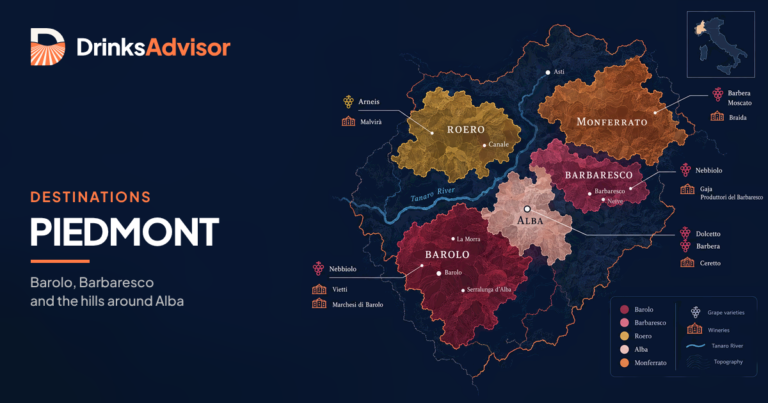
- 11 communes southwest of Alba, among them La Morra, Barolo, Castiglione Falletto, Serralunga d’Alba and Monforte d’Alba
- Barbaresco zone
- Barbaresco, Neive and Treiso, plus San Rocco Seno d’Elvio, just east of Alba
- Minimum aging
- Barolo 38 months, 18 in wood; Barbaresco two years, nine months in wood
- Scale
- Barbaresco makes roughly a third as much wine as Barolo
- When to go
- October for harvest and the Alba truffle fair; spring for quieter cellars
In this article
Barolo vs Barbaresco: the short answer
Choose Barolo if you want the bigger stage: more villages, more producers, castles on every second hilltop and the wine museum in the village that gave the wine its name. Choose Barbaresco if you want the same grape in a smaller, quieter setting, where three villages and a cooperative can be covered without a car journey longer than fifteen minutes.
The two zones are less than ten miles apart, with Alba between them, so the real question is rarely one or the other. It is where to spend most of your tasting days, and where to sleep. A first trip of three or four days usually gives Barolo two days and Barbaresco one, with a base in or near Alba.
Both wines are DOCG, the top tier of Italian wine law, and both reached it in 1980. The Consorzio di Tutela Barolo Barbaresco Alba Langhe e Dogliani oversees the two of them, which tells you how closely they are linked.
How the wines differ
Nebbiolo is a pale grape that makes deceptively strong wine: light in color, high in acidity and tannin, with aromas of roses, red cherry, tar and dried herbs. What changes between the two zones is mostly how long the law makes producers wait, and how the vineyards ripen.
| Point | Barolo | Barbaresco |
|---|---|---|
| Minimum aging | 38 months, at least 18 in wood | Two years, at least nine months in wood |
| Riserva | 62 months | Four years |
| Size of the zone | Nearly three times larger | A little over 700 hectares |
| Named vineyards (MGA) | 181 geographic mentions | 66 geographic mentions |
| Typical feel when young | Firmer tannin, needs time | Often more approachable sooner |
Treat the last row as a tendency, not a rule. A Barbaresco from a steep, old vineyard in Neive can be as tight as a Barolo, and a soft Barolo from La Morra can drink earlier than you expect. On a visit, the useful comparison is the same producer’s Langhe Nebbiolo next to its Barolo or Barbaresco: you taste the grape first, then what the vineyard and the extra time in cask add.
The named vineyards matter more than any brand. MGA, the official list of additional geographic mentions, lets a label name a specific hillside, such as Cannubi in Barolo or Rabajà in Barbaresco. Most cellar visits are built around comparing two or three of them.
The Barolo villages
The Barolo zone covers 11 communes southwest of Alba. Three lie entirely inside it (Barolo, Castiglione Falletto and Serralunga d’Alba), and the other eight only in part, with La Morra and Monforte d’Alba the best known of these. The villages sit on ridgetops, so every drive between cellars comes with a view across the vines.
Barolo village is the natural first stop. The WiMu wine museum fills the Falletti castle, and the Enoteca Regionale del Barolo in the castle cellars pours wines from across the zone. La Morra has the best-known belvedere in the Langhe; Serralunga d’Alba, with its own castle, is where many producers grow their most structured wines; Monforte d’Alba and Castiglione Falletto are smaller and quieter, with family estates down every lane.
With so many producers, Barolo is easier to plan with help. Our list of Barolo wineries that welcome visitors covers estates that take bookings, and the Barolo wine tours from Alba and Turin handle the driving if you plan to taste properly.
The Barbaresco villages
Barbaresco is the compact option: the villages of Barbaresco, Neive and Treiso, plus the hamlet of San Rocco Seno d’Elvio, which belongs to Alba. The zone starts just east of Alba and runs along the Tanaro, and you can cross it in a quarter of an hour.
Barbaresco village is essentially one street. Its tower looks over the river bend and the vineyards, and the Enoteca Regionale del Barbaresco occupies the former church of San Donato, where you can taste wines from more than a hundred producers of the denomination. Neive, on its own hill to the east, is one of the most handsome villages in the Langhe and grows a large share of the zone’s grapes. Treiso, higher and further south, is the least visited of the three.
The pace is the point. Barbaresco has fewer tour groups than Barolo, and the zone is small enough that a visit to two cellars and lunch in the village still leaves time for a walk.
Where to taste in each zone
In both zones, most estates receive visitors by appointment only, even the large ones, and many close for lunch. Book ahead, especially from late September to November. The two regional enoteche are the exception: in Barolo village and in Barbaresco village you can walk in, taste a range from different producers and decide which cellars to book next.
A good balance for a first trip is one enoteca, one large house with a full cellar tour and one small family estate per day. Keep the visits in the same zone on the same day: the hills make distances longer than they look on a map, and Nebbiolo tannin builds up quickly over three tastings.
Where to stay between Barolo and Barbaresco
Alba is the practical base. It sits between the two zones, has the widest choice of restaurants, and hosts the white truffle fair on autumn weekends. If you would rather wake up among vines, the hilltop hotels and agriturismi around La Morra, Monforte d’Alba and Serralunga d’Alba put you in the middle of Barolo, while Barbaresco and Neive offer a few smaller places with views over the Tanaro.
Our guide to Barolo hotels and where to stay in the Langhe compares the best options on both sides of Alba, with what each one is like to stay in and how it fits a day of tasting.
Getting around the Langhe
Public transport between the wine villages is thin, so the choice is between a driver and a rental car. If you rent, pick up at Turin airport or in Turin, and agree in advance who stays sober: Italy’s blood alcohol limit is 0.5 g/l, and lower for new drivers. Our guide to renting a car for a wine trip in Europe covers insurance, permits and the limits country by country.
Compare Turin rental cars on DiscoverCars →
Barolo vs Barbaresco: which one to visit
If you have one day and it is your first time, go to Barolo: the village, the museum and two cellars give you the clearest picture of what Langhe Nebbiolo can be. If you already know Barolo, or you dislike crowds, give that day to Barbaresco and Neive instead. With three days or more, do both, and finish in Barbaresco: after a few days of young Barolo, its softer edges are easier to appreciate.
Time of year matters as much as the zone. October brings harvest, truffles and the fullest calendar, but also the busiest roads and the hardest bookings. Our guide to wine harvest season explains what you can and cannot see in the cellars at that point. Late spring is quieter, and producers have more time to talk.
Common questions
Is Barbaresco just a lighter Barolo?
No. Both are made only from Nebbiolo and can age for decades. Barbaresco has a shorter minimum aging period and is often more approachable when young, but a top Barbaresco can be as structured as a Barolo. The vineyard and the producer matter more than the name on the label.
Can you visit Barolo and Barbaresco in one day?
Yes, the two zones are less than ten miles apart, with Alba in between. In practice, two or three tastings a day is the comfortable limit, so a one-day visit to both usually means one cellar or enoteca in each zone and lunch in Alba.
Do you need appointments to taste in Barolo and Barbaresco?
At most estates, yes, and it is wise to book a few weeks ahead in autumn. The Enoteca Regionale del Barolo, in the Falletti castle cellars, and the Enoteca Regionale del Barbaresco, in the former church of San Donato, are the easiest places to taste without a booking.
When is the best time to visit the Langhe?
October is the most popular month, with the Nebbiolo harvest and the Alba white truffle fair on weekends. Spring and early summer are quieter and greener, and producers usually have more time for visitors. Winter is calm but some estates close.
Barolo and Barbaresco are two sides of one grape and one landscape, which the UNESCO World Heritage listing of the Langhe-Roero and Monferrato vineyards recognized in 2014. Pick the zone that matches your pace, book the cellars first and the transport second, and start with the Barolo wineries that take visitors.