Finger Lakes Riesling is the reason most wine travelers find their way to upstate New York. Deep glacial lakes keep the vines alive through hard winters and let the grapes ripen slowly, and the wines run from bone dry to lusciously sweet, often from the same cellar. This guide explains the styles, the producers who built the name and how to taste them on a trip through Finger Lakes wine country.
ⓘ We may earn a commission when you book through links on this page, at no extra cost to you. Affiliate Disclosure
- The grape
- Riesling, the region’s signature white: 832 of its 10,790 producing acres
- Styles to know
- Dry, medium dry, medium sweet and sweet; most producers make two or three a year
- Where it grows
- Mainly on the slopes above Seneca, Keuka and Cayuga lakes
- Names to start with
- Dr. Konstantin Frank, Hermann J. Wiemer, Ravines, Boundary Breaks, Anthony Road, Red Newt
- When to taste
- Year-round; September and October bring harvest and the busiest weekends
- In one line
- Taste a dry and a sweeter bottling side by side before you buy
In this article
What makes Finger Lakes Riesling different
The Finger Lakes sit in western New York, a set of long, narrow lakes carved by glaciers. Some of the cuts reach 618 feet below sea level, and that volume of water is the whole story. In autumn the lakes release stored heat and lengthen the growing season; in spring they stay cold and hold back budbreak until the risk of frost has passed. Vines planted on the slopes close to the water survive winters that would kill them a few miles inland.
Riesling thrives in exactly those conditions. It is a late-ripening grape that keeps its acidity in a cool climate, and a long, mild autumn lets it gain flavor without losing that edge. The result is a white with high acidity, moderate alcohol and aromas that lean toward citrus, green apple, peach and a stony, mineral note that locals put down to the shale beneath the vineyards.
The region plants other grapes too, from Cabernet Franc and Pinot Noir to Gewürztraminer and native hybrids, but the Finger Lakes Wine Alliance describes the area as known for aromatic whites with a focus on Riesling. Its figures, based on the New York Wine and Grape Foundation’s 2024 vineyard report, count 832 acres of Riesling out of 10,790 producing acres.
The Finger Lakes AVA dates from 1982, and two lakes later earned appellations of their own: Cayuga Lake in 1988 and Seneca Lake in 2003. You will see all three names on labels.
How Riesling became the region’s grape
Vines were first planted at Hammondsport, on Keuka Lake, in 1829, but for more than a century the region worked almost entirely with native and hybrid grapes. European varieties were thought too fragile for upstate winters.
Dr. Konstantin Frank changed that. A viticulturist from Ukraine, he arrived at the Geneva Experiment Station in 1951, grafted European vines onto hardy rootstock and in 1962 opened Vinifera Wine Cellars in Hammondsport. His own account of those years is on the Dr. Konstantin Frank winery’s site. Riesling was among the varieties he championed, and his success persuaded others to plant it.
The second name every Riesling drinker learns is Hermann J. Wiemer, a German-born winemaker who bought an abandoned farm in Dundee, on the west side of Seneca Lake, in 1973. He planted Riesling, Chardonnay and Gewürztraminer, set up a vine nursery and founded his winery in 1979. Since 2007 it has been run by Fred Merwarth and his partners, and it remains one of the reference points for dry Finger Lakes Riesling.
The four styles of Finger Lakes Riesling, from dry to sweet
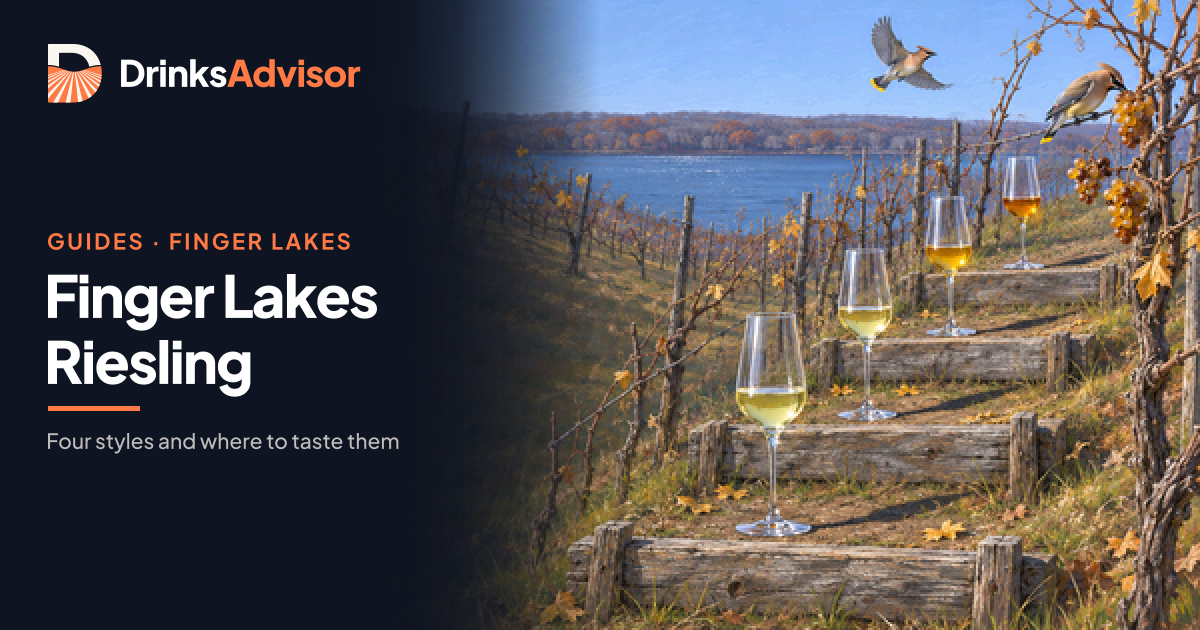
The most useful thing to know before a tasting is that the same grape can taste completely different from one bottle to the next. The Alliance notes that the average producer makes two to three styles of Riesling a year. Many back labels carry the International Riesling Foundation’s taste profile, a four-step scale that tells you how sweet the wine will taste.
| Style | Common label words | What to expect | Good with |
|---|---|---|---|
| Dry | Dry Riesling | Little or no perceptible sweetness; lemon, apple and a firm, mineral finish | Oysters, trout, goat cheese |
| Medium dry | Semi-Dry | A touch of sweetness balanced by acidity; reads as juicy rather than sweet | Thai and Vietnamese dishes, pork |
| Medium sweet | Semi-Sweet | Clearly sweet, with peach and apricot; still fresh | Spicy food, blue cheese |
| Sweet | Late Harvest, dessert bottlings | Rich and honeyed, made in small quantities | Fruit tarts, aged cheese |
Acidity changes how sweetness reads. A Finger Lakes semi-dry can taste drier than its sugar level suggests, because the region’s sharp acidity cuts through it. If a tasting room pours both, ask for the dry and the semi-dry side by side: it is the quickest way to find where your palate sits.
Beyond the four still styles, several cellars make sparkling wine from Riesling, and the best dry bottlings are built to age. A few producers pour older vintages at the winery, which shows how the wines develop richer, toasty notes with time.
Finger Lakes Riesling producers to know
There are many more good addresses than these six, and our guide to the best Finger Lakes wineries to visit goes wider. These are the names that come up first in any conversation about the grape, and all of them welcome visitors.
Dr. Konstantin Frank, Keuka Lake
The historic estate above Hammondsport is where the Finger Lakes vinifera story began, and a tasting here covers the full range from dry to sweet. The standard tasting costs $18 per person, and a seated tasting with small bites is $75. It is the natural first stop on Keuka Lake.
Hermann J. Wiemer, Seneca Lake
On the west shore near Dundee, Wiemer focuses on dry and off-dry Riesling from its own vineyards, including single-vineyard bottlings. The library tasting, at $95 per person, is the best way to see how these wines age.
Ravines Wine Cellars, Seneca and Keuka lakes
Ravines farms about 130 acres of estate vineyards and is best known for its Dry Riesling. It runs two tasting rooms, one in Geneva on Seneca Lake and one near Hammondsport on Keuka, and recommends a reservation at Geneva. Groups are capped at six for a general tasting.
Boundary Breaks, Seneca Lake
On the east side of Seneca near Lodi, Boundary Breaks says plainly that it focuses on Riesling and Cabernet Franc. The tasting room opens every day for walk-in tastings, for groups of up to six, which makes it an easy stop on an unplanned afternoon.
Anthony Road Wine Company, Seneca Lake
Near Penn Yan on the west shore, Anthony Road pours its Dry and Semi-Dry Rieslings at seated tastings costing $10 to $15 per flight. Allow about 45 minutes; reservations are recommended, though walk-ins are welcome when there is space.
Red Newt Cellars, Seneca Lake
In Hector, on the east side of the lake, Red Newt offers standing tastings from Friday to Monday on a first-come basis, by appointment midweek, and runs a bistro alongside. It is a good place to compare several Rieslings over lunch.
Where to taste Finger Lakes Riesling on a trip
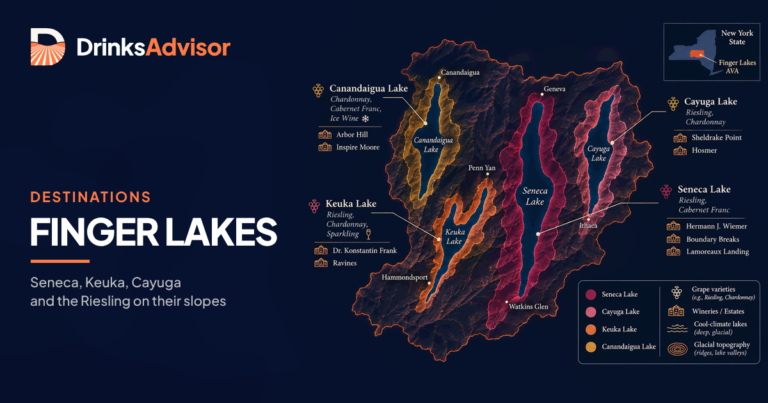
Seneca Lake has the densest concentration of Riesling producers, and the Seneca Lake Wine Trail is the obvious place to begin: five of the six names above have tasting rooms on its shores. Keuka is smaller and quieter, with Dr. Frank and Ravines at Hammondsport, and our page on Keuka Lake wineries lists the rest. Cayuga Lake’s wineries, closer to Ithaca, are mostly small family estates.
Three or four tastings a day is plenty, and the distances around the lakes are longer than the map suggests. If you would rather not drive between cellars, a guided day or a private driver solves the problem: our guide to Finger Lakes wine tours compares the options. If you plan to explore on your own, Rochester is the usual gateway airport for a rental car.
Compare Rochester rental cars on DiscoverCars →
For a base, Geneva at the north end of Seneca Lake puts you within easy reach of both shores; see our picks for hotels in Geneva, NY, or the wider selection of Finger Lakes hotels around all four lakes.
Common questions
Is Finger Lakes Riesling sweet?
Not necessarily. The region makes everything from dry to sweet, and dry Riesling is the style most of the serious producers are known for. Check the label for the words Dry, Semi-Dry or Semi-Sweet, or for the taste profile scale on the back.
How does it compare with German Riesling?
Both come from cool climates and share high acidity and a wide range of sweetness levels, which is why Finger Lakes Riesling is so often compared with Germany. The pioneers of the region, Dr. Frank and Hermann Wiemer, both brought European experience with them.
When is the best time to taste in the Finger Lakes?
Tasting rooms open year-round. September and October bring harvest and fall color but also the busiest weekends, so book seated tastings ahead. Late spring and early summer are quieter, with long evenings on the lakes.
Does Finger Lakes Riesling age well?
The best dry bottlings do. Their acidity keeps them fresh for years while the fruit turns richer and more complex, and some producers, such as Hermann J. Wiemer, offer library tastings of older vintages.
Finger Lakes Riesling rewards a little preparation. Know the four styles, start with one of the founding estates, then let the tasting rooms show you how much a lake, a slope and a winemaker’s choices can change a single grape. When you are ready to plan the days, our guide to guided wine tours and private drivers turns this list into a route you can book.