Assyrtiko is the white grape that makes Santorini taste like Santorini: bone-dry, salty at the edges and sharp enough to stand up to a plate of grilled octopus. It grows in ash and pumice, in vines coiled low against the wind, and it also gives the island its amber dessert wine, Vinsanto. Knowing how the grape works, and which styles to ask for, turns a day of tastings across Santorini wineries into a real comparison.
ⓘ We may earn a commission when you book through links on this page, at no extra cost to you. Affiliate Disclosure
- The grape
- Assyrtiko, a white variety native to Santorini, also planted on other Aegean islands and on the Greek mainland
- Where it grows
- Volcanic ash and pumice, with vines trained low in basket-shaped kouloures
- Styles to know
- Dry Santorini PDO, oak-aged Nykteri, and Vinsanto from sun-dried grapes
- What it tastes like
- Citrus, stone and a saline finish, carried by acidity that holds even in very ripe years
- Harvest
- Usually from mid-August, earlier than most of Europe
- In one line
- Taste a young dry Assyrtiko, a Nykteri and a Vinsanto at the same winery before you judge the grape
In this article
What Assyrtiko is
Assyrtiko is a white wine grape indigenous to Santorini. It is the backbone of the island’s vineyards and the reason Santorini became Greece’s best-known white wine name abroad. The clusters are large, with yellow-gold skins and juicy flesh, and the grape has one trait that sets it apart from almost every other warm-climate white: it keeps its acidity even when it ripens fully.
That matters on an island where summers are long, dry and windy. In most hot places a white grape picked ripe tastes soft and heavy. Assyrtiko from Santorini instead tastes tight and citrusy, with a stony, almost briny finish that wine writers keep describing as savory. It is the reason a glass of it works with fried fish, tomato fritters and the island’s yellow split-pea fava, not only as an aperitif.
The grape now travels. It is planted on Paros and in Chalkidiki in northern Greece, and growers have tried it in South Australia’s Clare Valley and in California. Those wines are worth tasting, but they are a different conversation. On Santorini the grape, the soil and the training system come as a package, and the package is what you are paying for.
Assyrtiko also ages better than its crisp reputation suggests. A five- or ten-year-old bottle, if a winery pours one, shows how the citrus turns toward honey and smoke while the acidity stays in place.
Why Santorini’s volcanic soil shapes Assyrtiko
Santorini’s vineyards sit on what the island’s eruptions left behind: ash, pumice and volcanic rock, with almost no clay and very little organic matter. Rain is scarce in the growing season, so the vines live largely on night moisture from the sea and on roots that push deep into the porous soil.
The same soil is why the vineyards were never hit by phylloxera, the root louse that destroyed most of Europe’s vines in the late 1800s. The pest does not thrive in sandy volcanic ground, so Santorini’s vines are still own-rooted, never grafted onto American rootstock. Many plantings are very old. Wines of Greece, the national trade body, calls it one of the most ancient vineyards in the world.
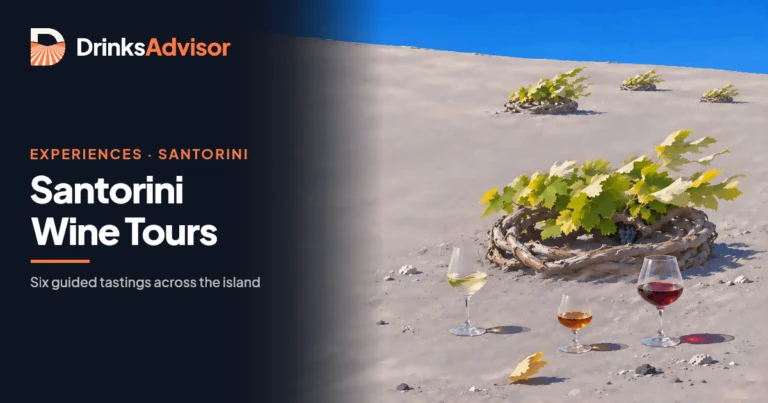
Then there is the shape. Walk into a Santorini vineyard and you will not see rows on wires. You will see low rings of woven cane lying almost on the ground, each one a vine. This is the kouloura (plural kouloures), a basket the grower winds year after year. The grapes hang inside it, shaded from the sun and protected from the strong summer winds that would otherwise strip leaves and scorch fruit. A comparative trial on the island found that kouloura vines kept a less stressed water status than vines trained on wires, and coped better with heatwaves.
All of this costs yield. Old, own-rooted vines in dry ash give very little fruit per acre, which is part of why Santorini Assyrtiko is concentrated, and part of why it is not cheap. When a bottle from the island costs noticeably more than other Greek whites, you are paying for hand-tended baskets and tiny crops, not for a label.
If you have tasted the wines of Sicily’s volcano, the comparison is useful. Our guide to Nerello Mascalese and Carricante on Etna covers another volcanic white with high acidity, grown on terraced slopes instead of a windswept island plateau.
Assyrtiko styles on Santorini: dry, Nykteri and Vinsanto
The island’s protected designation, Santorini PDO, covers both the dry whites and the sweet wine. For a dry white to carry the name, at least 75% of the blend must be Assyrtiko, with the rest from the local Athiri and Aidani grapes. In practice most of the dry wines you will taste are 100% Assyrtiko.
| Style | Grapes | How it is made | What to expect |
|---|---|---|---|
| Santorini PDO (dry) | At least 75% Assyrtiko; Athiri and Aidani allowed | Usually fermented and aged in stainless steel | Lemon, stone and salt; high acidity |
| Nykteri | At least 75% Assyrtiko | Riper grapes; at least three months in oak | Fuller and rounder, with toast and dried citrus |
| Vinsanto | At least 51% Assyrtiko; the rest mostly Aidani | Grapes dried in the sun, then at least two years in barrel | Sweet and amber, balanced by acidity; figs, raisins, coffee |
Dry Assyrtiko is the place to start. Young bottles are tight and pale; some producers also release single-village or old-vine cuvées that show how much the wine changes from one part of the island to another. Ask your host where the grapes for each wine were grown: the answer is often a village name, and comparing two villages side by side is the most instructive pour on the island.
Nykteri is Santorini’s traditional oak-aged white. The name comes from the Greek word for night, after the old habit of pressing the day’s harvest overnight, when it was cool. Today it is made from riper Assyrtiko and must spend at least three months in wood. It is the style to try if you find young Assyrtiko too austere, and the one to order with richer dishes such as grilled meat or lamb.
Vinsanto: the island’s sun-dried sweet wine
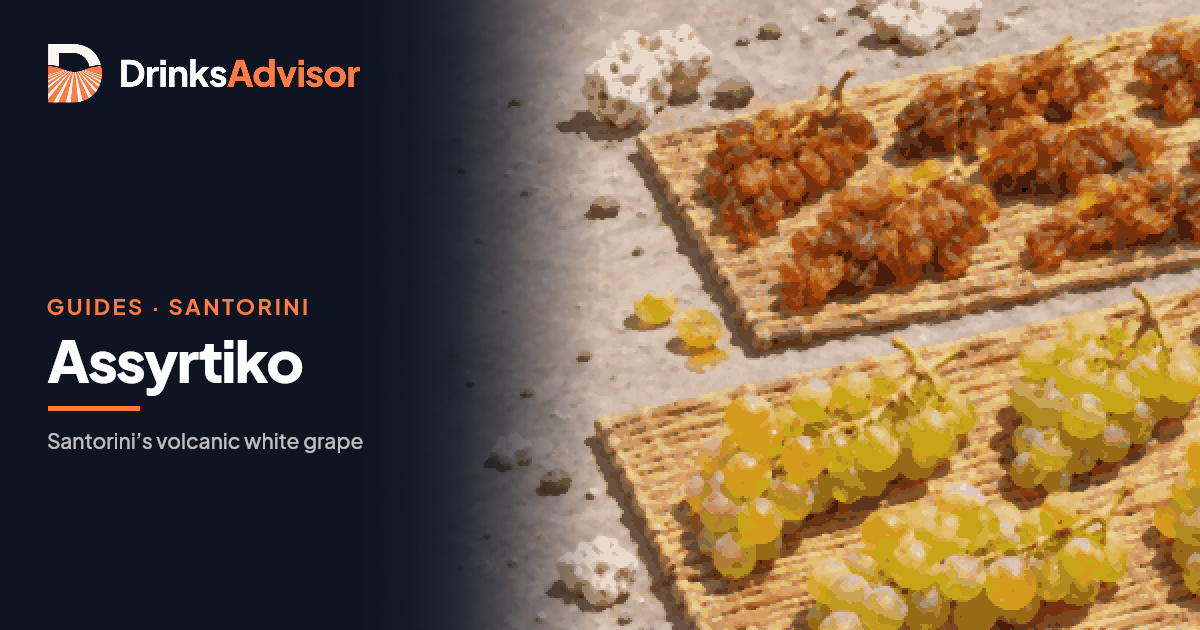
Vinsanto is the other face of Assyrtiko, and the wine many visitors remember longest. After the harvest in late August, the grapes destined for it are spread out in the sun to dry for one to two weeks. They lose much of their water and concentrate their sugar and acidity before they are pressed. Wines of Greece puts the cost in plain numbers: between 49 and 84 pounds of grapes go into each gallon of finished wine.
The rules require at least 51% Assyrtiko, with Aidani making up most of the rest, and at least two years of aging in barrel. Most producers go far beyond that. Wineries such as Santo Wines sell Vinsanto with 12 and 20 years of aging, and producers favor old, large barrels so the wood does not cover the fruit. The result is dark amber, sweet but not cloying, because Assyrtiko’s acidity keeps the wine lively. Expect dried figs, raisins, coffee and orange peel.
Do not confuse it with Vin Santo from Tuscany, which is also made from dried grapes but from different varieties and with different methods. Santorini’s Vinsanto is written as one word, and on the island it is poured at the end of a tasting, often with a dessert or a piece of hard cheese. A small glass is enough: it is the wine that makes the most sense to buy and carry home, and our guide to shipping wine home to the US explains what that costs if you buy more than you can pack.
Where to taste Assyrtiko on Santorini
Almost every winery on the island pours Assyrtiko, so the useful question is which visit shows you the grape best. The wineries sit within a short drive of each other, and the ones below cover the range from a big caldera terrace to a family estate with very old vines.
Santo Wines: the full range in one flight
The island’s growers’ cooperative near Pyrgos is the easiest place to taste dry Assyrtiko, Nykteri and Vinsanto in the same sitting, with the caldera below the terrace. It is busy at sunset, so book ahead. Our guide to visiting Santo Wines compares the tasting options.
Estate Argyros: old vines in Episkopi Gonia
Estate Argyros has farmed on the island since 1903 and works vineyards where the average vine is more than 70 years old, with some parcels far older. It is the visit for anyone who wants to understand what old, own-rooted Assyrtiko tastes like, and its Vinsanto is a benchmark for the style.
Venetsanos: a historic winery above the caldera
Built into the cliff near Megalochori, Venetsanos was the island’s first industrial winery and now pours its wines on terraces facing the caldera. Our page on the Venetsanos Winery tasting covers what is included.
A guided day, or a base among the vines
If you would rather not drive between cellars, a guided tour that visits three wineries in an afternoon is the simplest way to compare Assyrtiko from different villages: our round-up of Santorini wine tours lists the ones worth booking. For somewhere to sleep within reach of the vineyards, see where to stay in Santorini for wine lovers.
Exploring on your own works well on an island this size, as long as whoever drives skips the tastings: Greece’s legal blood-alcohol limit is lower than in most US states. Our guide to renting a car for a wine trip in Europe covers insurance and the paperwork US drivers need.
Compare Santorini rental cars on DiscoverCars →
Common questions
How do you pronounce Assyrtiko?
Say it ah-SEER-tee-ko, with the stress on the second syllable. You will also see it spelled Asyrtiko on some labels; it is the same grape.
What does Assyrtiko taste like?
Young dry Assyrtiko from Santorini tastes of lemon, green apple and wet stone, with high acidity and a salty finish. With age, or in the oaked Nykteri style, it becomes rounder, with notes of honey, toast and dried citrus.
Is Vinsanto the same as Italian Vin Santo?
No. Both are sweet wines from dried grapes, but Santorini’s Vinsanto must be at least 51% Assyrtiko, with Aidani for most of the rest, and is aged for at least two years in barrel. Tuscan Vin Santo uses other grapes and its own production rules.
Why is Santorini Assyrtiko more expensive than other Greek whites?
Yields are very low. The vines are old, own-rooted and trained by hand into low baskets, they grow in dry volcanic soil, and every step of the work is manual. Little fruit per acre and a lot of labor make the wine scarce, and the price reflects it.