National Sangria Day falls on December 20, which in 2026 is a Sunday: an odd date for a drink most people picture on a summer terrace in Seville. It is a good excuse to make sangria properly, with a young Spanish red, a little fruit and patience, instead of the syrupy pitcher it often becomes. Here is how Spaniards make it, what the law in Spain says it must be, and where to drink it there.
ⓘ We may earn a commission when you book through links on this page — at no extra cost to you. Affiliate Disclosure
- Date
- Sunday, December 20, 2026; every year on December 20
- Origin
- Spain and Portugal; the day itself is an American food holiday
- The wine
- A young, unoaked Spanish red: Tempranillo or Garnacha
- Time
- Ten minutes of work, then two hours to overnight in the fridge
- The rule
- In the EU, only sangria made in Spain or Portugal can be sold as sangria
In this article
What National Sangria Day is
National Sangria Day is one of the many American food and drink days on the calendar, observed each year on December 20. Nobody has claimed it: the calendars that list it give no founder and no year of creation, so treat it as what it is, a date that invites you to open a bottle of Spanish red and a bag of oranges.
The drink is much older than the day. Sangria comes from Spain and Portugal, its name means “bloodletting” in both languages, a nod to the color, and wine sweetened and flavored with citrus and spices was drunk across Iberia long before anyone wrote down a recipe. Americans met it later: Spanish restaurants served it in the 1940s, and the 1964 New York World’s Fair made it known across the country.
What makes it sangria: the rule in Spain
Sangria has a legal definition in the European Union, and it is stricter than most American recipes. Under Regulation (EU) No 251/2014 on aromatized wine products, sangria is a drink made from wine and flavored with natural citrus extracts or essences, with or without the juice of the fruit. Spices and a little carbonation are allowed. Added coloring is not: the red has to come from the wine itself.
The same rule sets the strength between 4.5% and just under 12% alcohol, which tells you something about the style: lighter than the wine you start from, never a cocktail loaded with spirits. And the name is protected. A bottle labeled “Sangría” in the EU has to be made in Spain or Portugal; anything produced elsewhere must call itself an aromatized wine-based drink and say where it was made.
How to make sangria for National Sangria Day
Start with the wine, because it does most of the work. Sangria was traditionally made with Rioja, and the right bottle is a young one: a Rioja joven or a Garnacha from Campo de Borja or Calatayud, fruity, low in tannin and without obvious oak. An expensive aged Reserva is wasted here, since vanilla and wood turn bitter next to citrus peel. For this National Sangria Day, think of a bottle you would happily drink with tapas, in the $10 to $15 range.
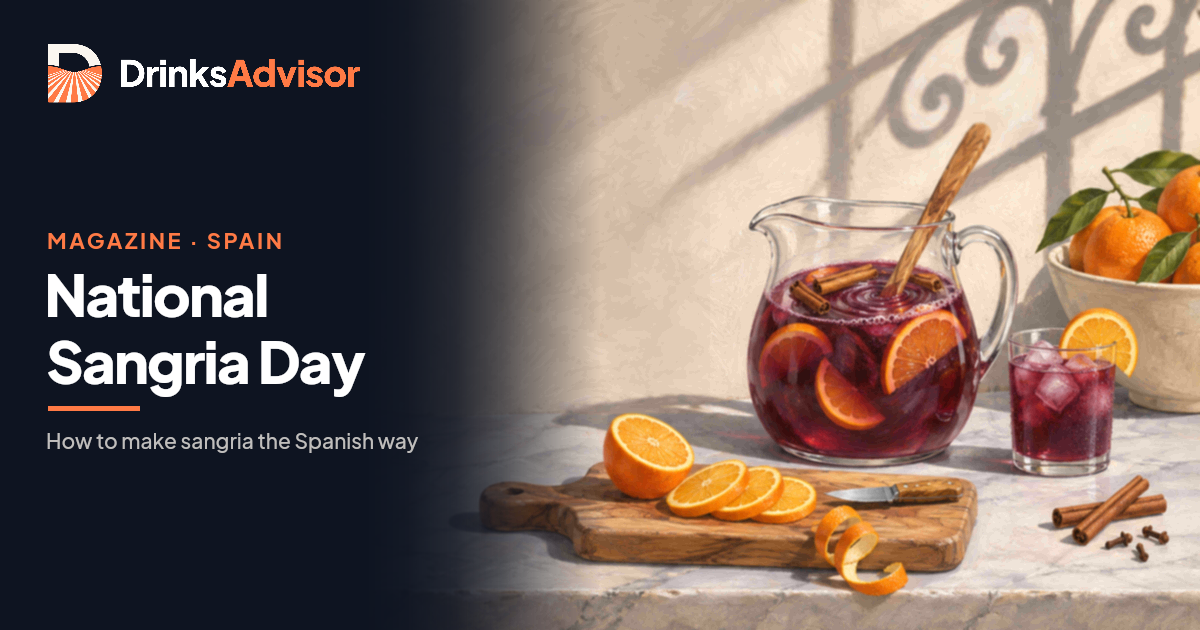
For one 750 ml bottle, the proportions that work are simple. Slice one orange and half a lemon into rounds, dice one apple, and put the fruit in a pitcher with two tablespoons of sugar. Stir until the sugar starts to dissolve in the juice, pour in the wine, add a cinnamon stick if you like, and refrigerate.
- Rest it. Two hours is the minimum; overnight is better, and the citrus peel gives the drink its backbone. Beyond a day it turns bitter, so take the lemon out if you make it far ahead.
- Taste before serving. Add sugar a teaspoon at a time only if the wine is sharp. Sangria should taste of wine and fruit, not of syrup.
- Lengthen at the last moment. A splash of soda water or the Spanish gaseosa, a lightly sweet sparkling water, goes in just before pouring, with ice in the glasses rather than in the pitcher so the wine does not dilute.
Many bars in Spain and most American recipes add a measure of brandy or orange liqueur. We leave it out: it pushes the drink toward a cocktail and covers the wine, which is the point of the exercise.
A December sangria, and a white one
December 20 is a winter date, and sangria adapts well to it. Swap the summer fruit for what is in season: blood oranges or clementines, pear instead of apple, a cinnamon stick and two cloves in the pitcher. Serve it cool rather than ice-cold, with fewer cubes, and it sits comfortably next to a holiday cheese board or roast pork.
White sangria, sangría blanca, is a more recent invention, made the same way with a young, dry white such as Verdejo from Rueda or Albariño from Rías Baixas, with peach, green apple and lemon. Some bars make it with cava; if you do, add the sparkling wine at the end, over the macerated fruit, so the bubbles survive.
What Spaniards actually drink: tinto de verano
A detail worth knowing before you travel: in Spain, sangria is mostly a drink for fiestas, family gatherings and visitors. On an ordinary summer evening, what locals order at the bar is tinto de verano, red wine topped with gaseosa or lemon soda over ice, poured in a few seconds and much cheaper than a pitcher. If a terrace in a tourist district sells sangria by the glass at a premium, the tinto de verano next to it is often the better drink.
Good sangria does exist in Spain, though, usually made in a pitcher for the table, in Andalusia above all, and many restaurants make their own. Asking whether it is casera, homemade, is the quickest way to avoid the bottled kind.
Where to drink sangria in Spain
If you want to learn it where it comes from, the three big cities have short, well-reviewed classes. In Seville, the Sangria Tasting Experience lasts an hour and a half and has 4.8/5 across 507 GetYourGuide reviews, from $28 per person. In Madrid, the Sangría Workshop & Tasting with Local Cheese takes two hours in the city center, rated 4.8/5 across 123 GetYourGuide reviews, from $33.
In Barcelona, sangria usually comes with a cooking class. The paella class with a market visit, tapas and sangria runs three hours and holds 5.0/5 across 3,325 Viator reviews, from $102 per person. It is the one to choose if you want a meal, not just a glass.
Learn sangria in Spain
Compare sangria tastings and workshops in Seville, Madrid and Barcelona, and check the dates and the cancellation policy before you book.
Go to the source: the wine in Rioja
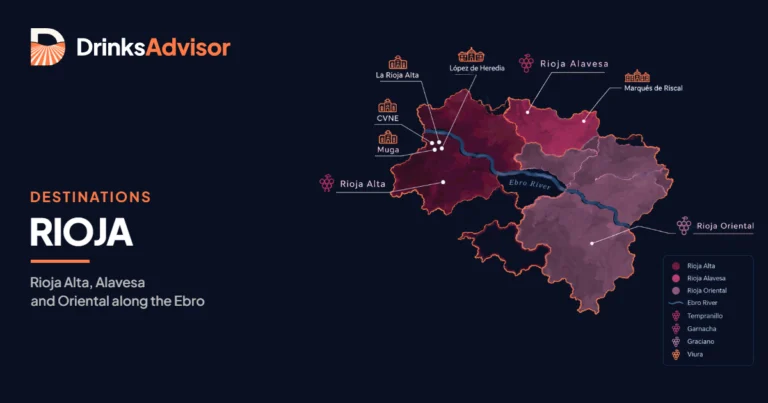
The wine that traditionally went into sangria is worth a trip on its own. Rioja is an easy drive from Bilbao, and our Rioja wine country guide explains how its three areas differ and when to go. The Rioja Regulatory Council is the official source on the appellation and its rules.
To sleep among the vineyards, start with our selection of bodegas with rooms in Rioja; if you prefer a town with bars and tapas within walking distance, see where to stay in Haro, the wine capital of Rioja Alta. And for a long lunch in a cellar, our round-up of Rioja barrel dinners covers the bodegas that serve one.
National Sangria Day 2027: the next date
The date never moves, so National Sangria Day 2027 falls on Monday, December 20, 2027. Whatever the year, the method is the same: a young Spanish red, citrus, a little sugar, a night in the fridge and no shortcuts. Make one pitcher the Spanish way and the bottled versions will be hard to go back to; taste the wine on its own in Rioja, and you will understand why it was the one Spaniards reached for in the first place.
Prices are indicative and set by our booking partners.